

Violin
Giovanni Paolo Maggini
Brescia, c. 1620
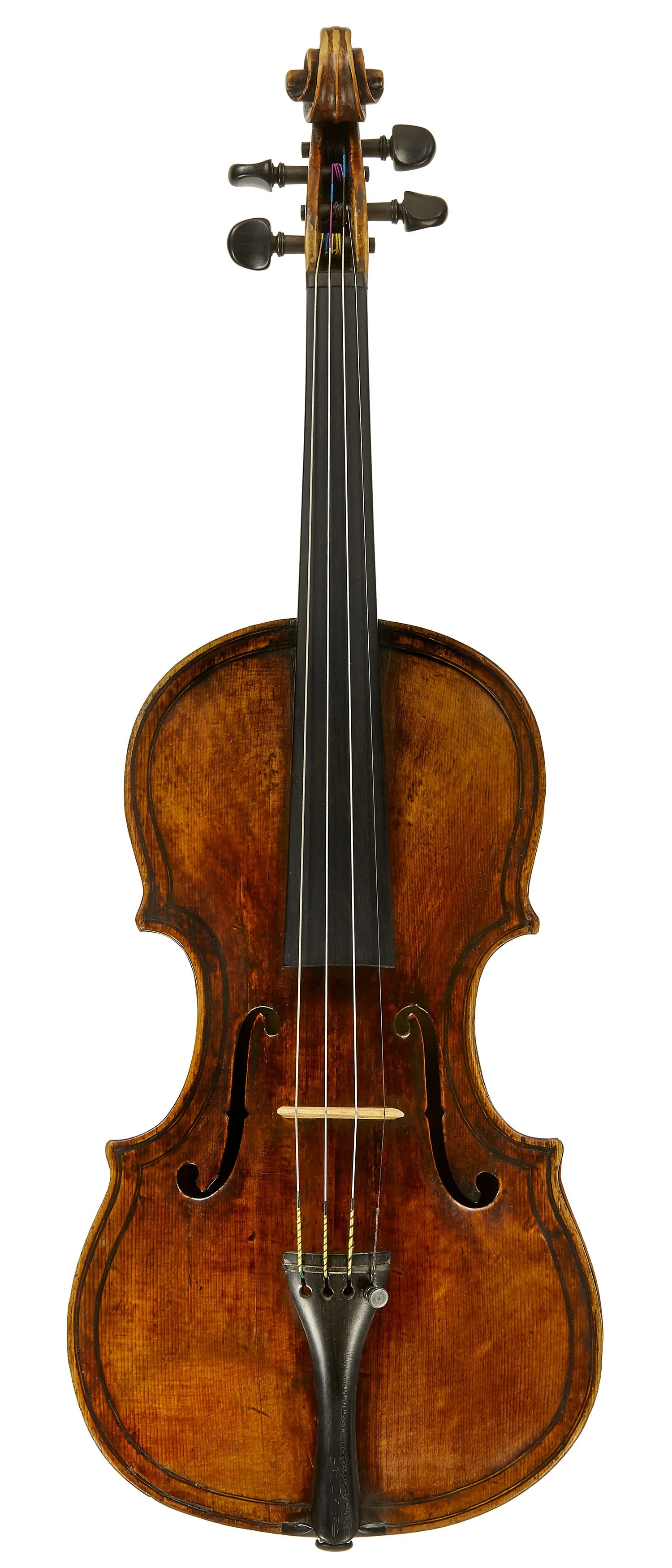
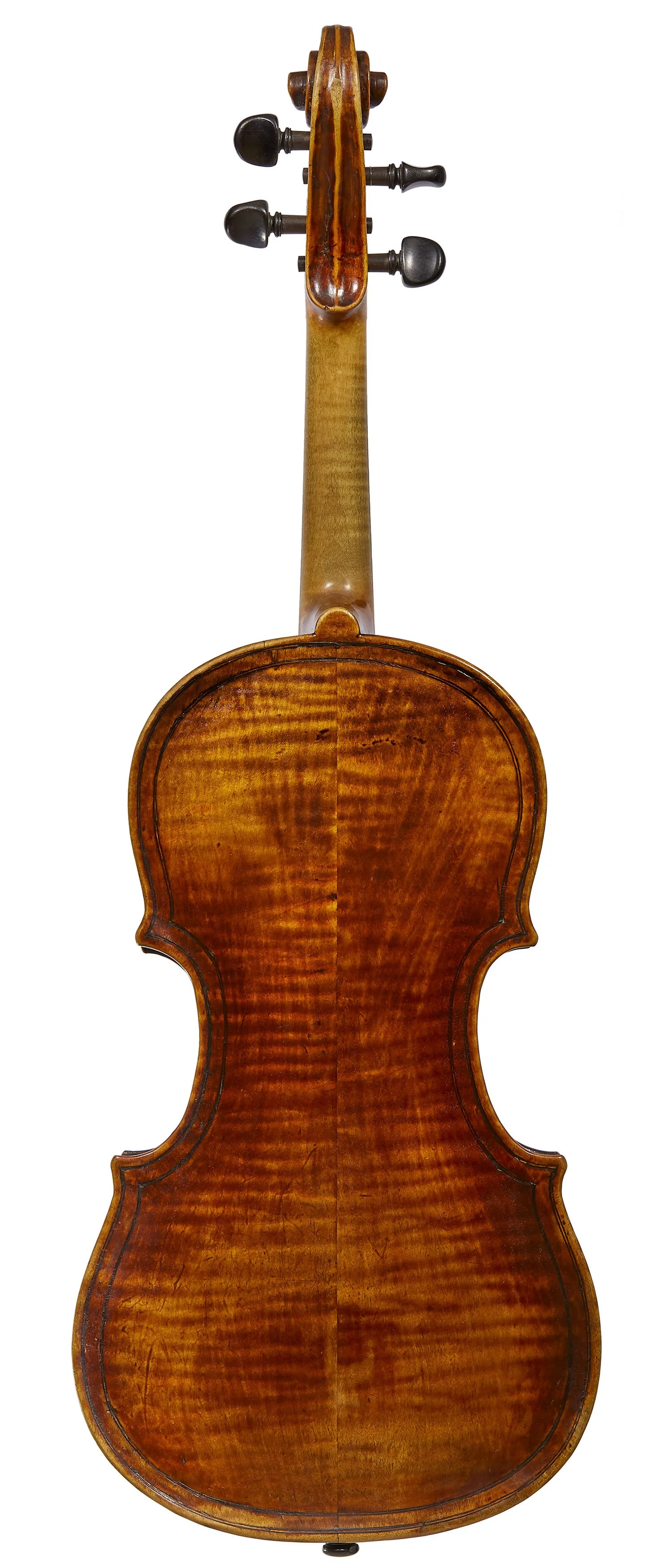
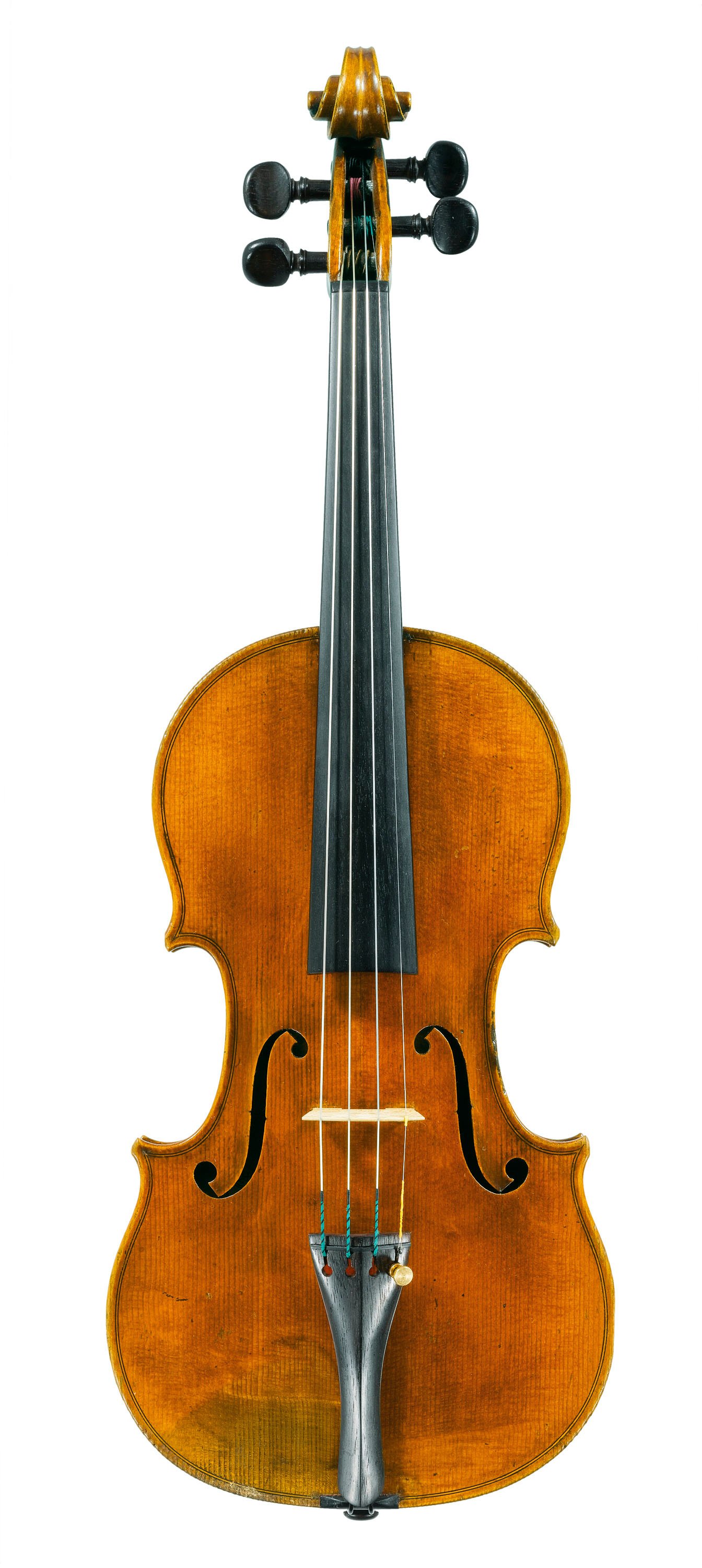
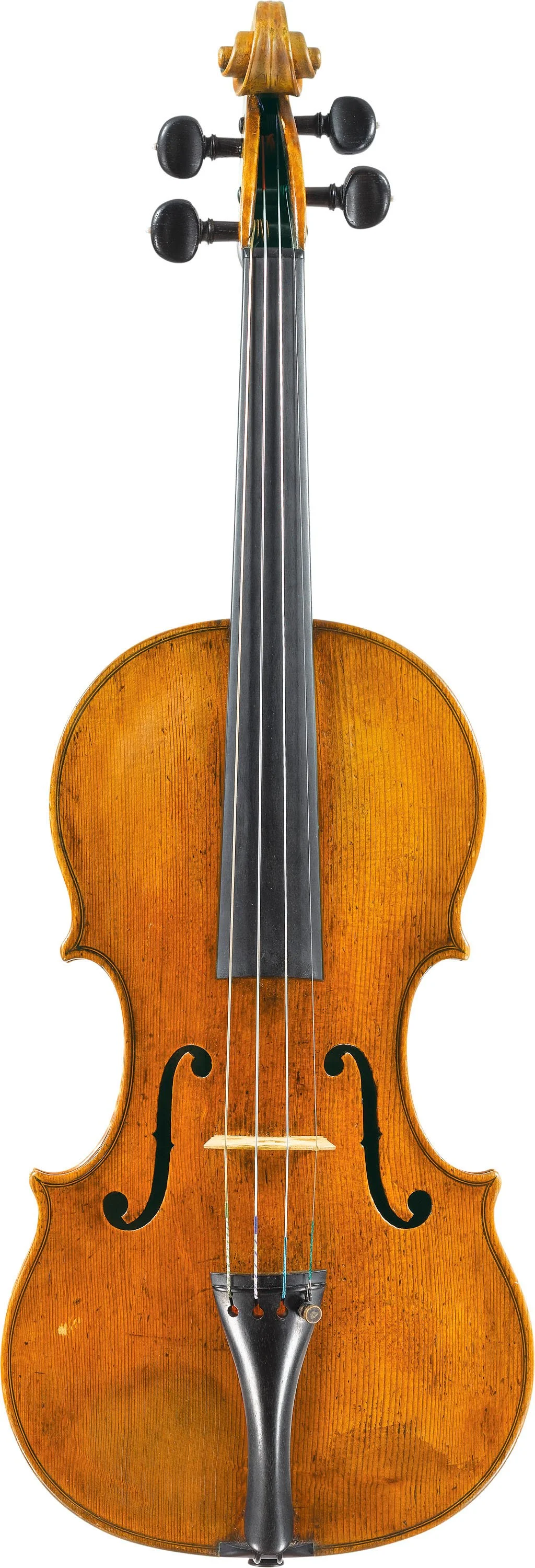
The violin by Giovanni Paolo Maggini, dating from around 1620, is among the most impressive surviving examples of the Brescian school of violin making in the early 17th century. Maggini is regarded as the foremost representative of this tradition and, building on the work of his teacher Gasparo da Salò, developed a distinctive style that had a lasting influence on the evolution of the violin. Together with da Salò, he established Brescia, alongside Cremona, as one of the two principal centres of early Italian violin making. Following Maggini’s death in 1630 or 1631, probably during an outbreak of plague, his workshop appears not to have continued, with the result that comparatively few instruments of the Brescian school have survived.
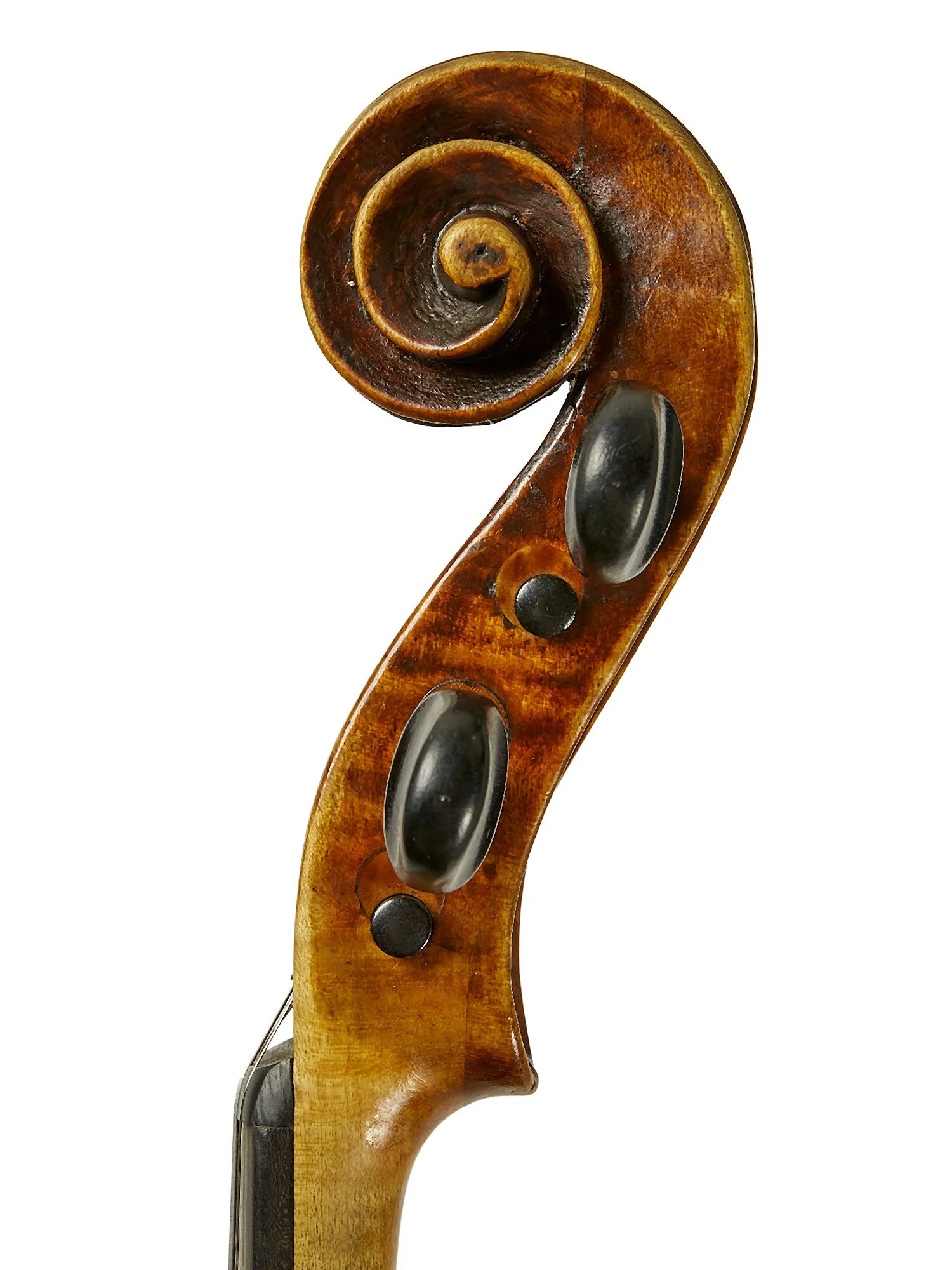
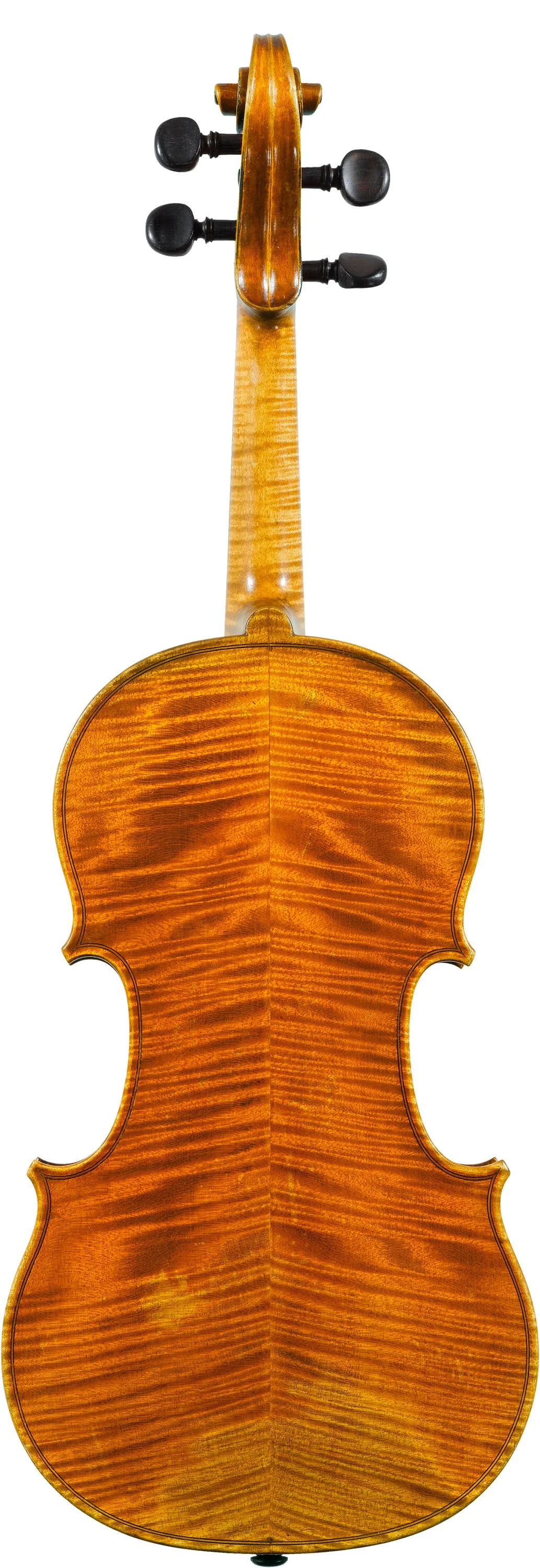
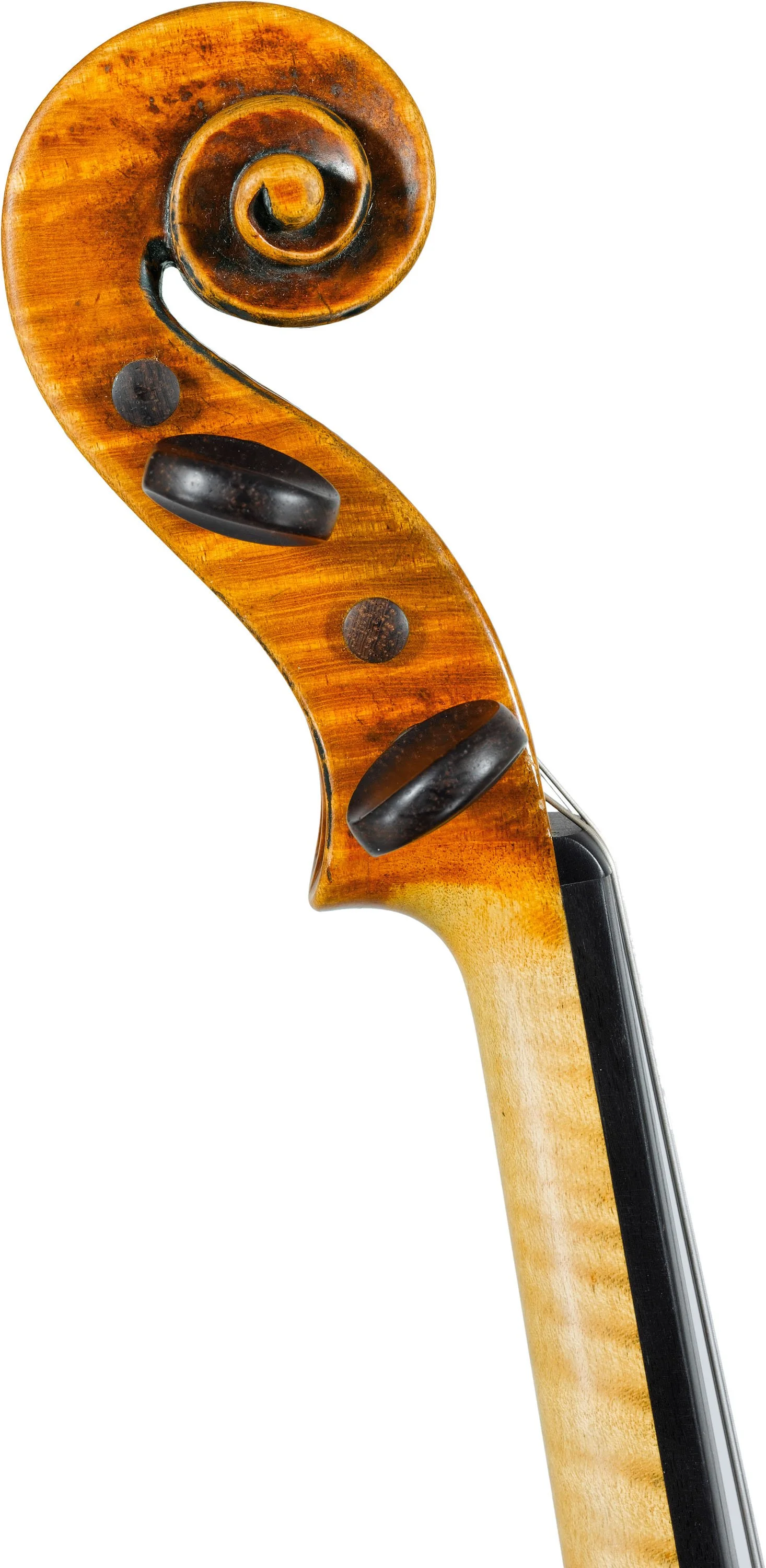
Characteristic features of this instrument include its generous proportions, powerfully modelled arching and deep, luminous reddish-brown varnish. The two-piece back of flamed maple and the finely grained spruce top give the violin a striking visual presence typical of Maggini’s work. Particularly distinctive is the double purfling characteristic of Maggini, a feature found on many of his instruments and one that sets them apart from those of most other Italian schools. As with many instruments of its period, certain elements were altered over the centuries. The head probably dates from a later period, while the dimensions of the body were reduced – a common practice, since Maggini’s often relatively large original models were subsequently adapted to changing performance requirements.
Maggini violins are especially valued for their warm, dark and richly resonant tone. They combine considerable tonal depth with remarkable carrying power and possess a distinctive expressive character that makes them highly attractive to both soloists and chamber musicians. Among the best-known musicians to play a Maggini instrument was the 19th-century Norwegian virtuoso Ole Bull, whose preference for the powerful sound of these violins contributed to their growing reputation.
Giovanni Paolo Maggini occupies an important position in the transition from the early bowed instruments of northern Italy to the classical violin. His work influenced numerous later makers and is today regarded as an important testament to a period in which the form and tonal ideals of the modern string instrument were taking decisive shape. This violin of around 1620 vividly embodies both the distinctive craftsmanship and the unmistakable tonal character of the Brescian school.
Photos: © Tarisio, New York
Violin
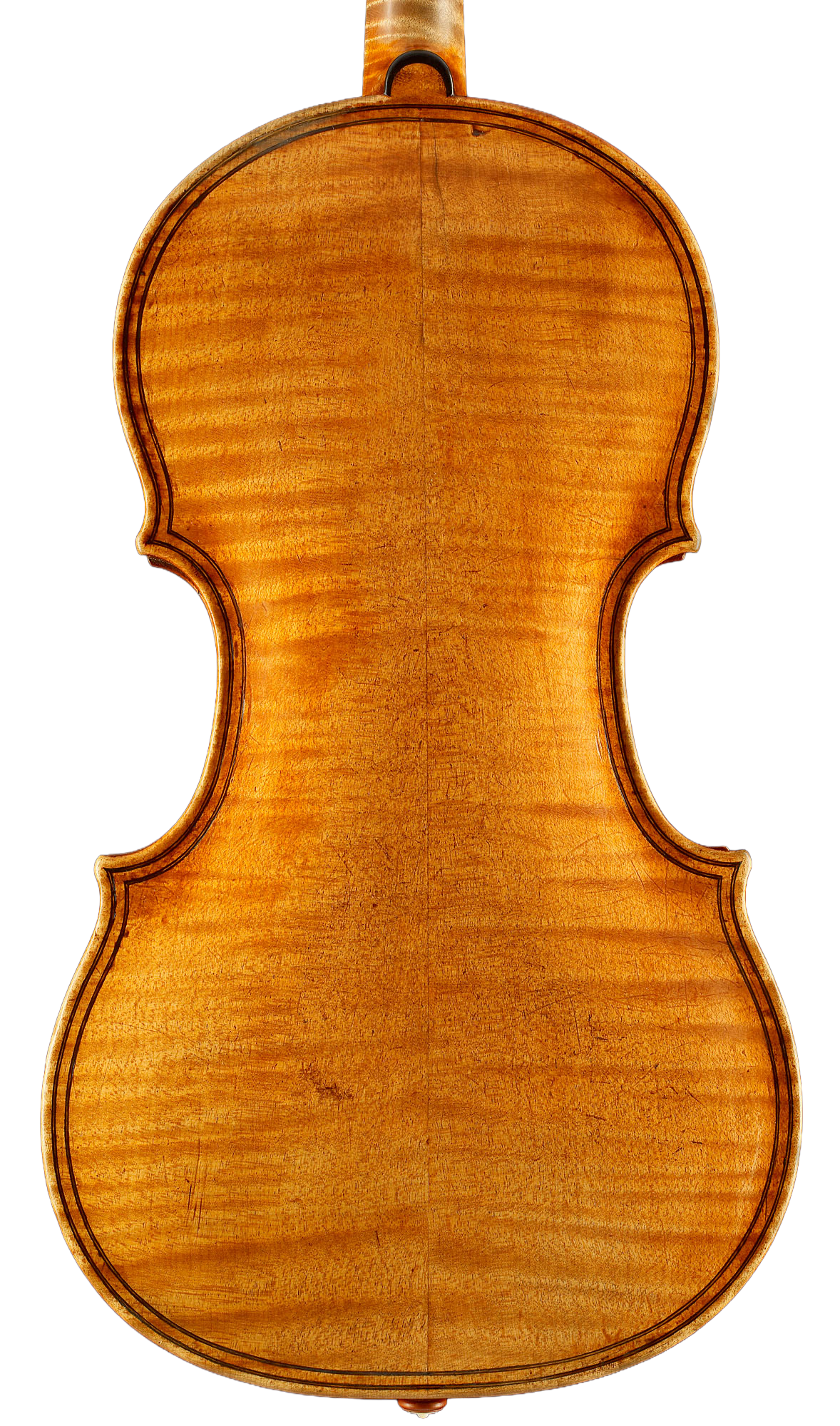
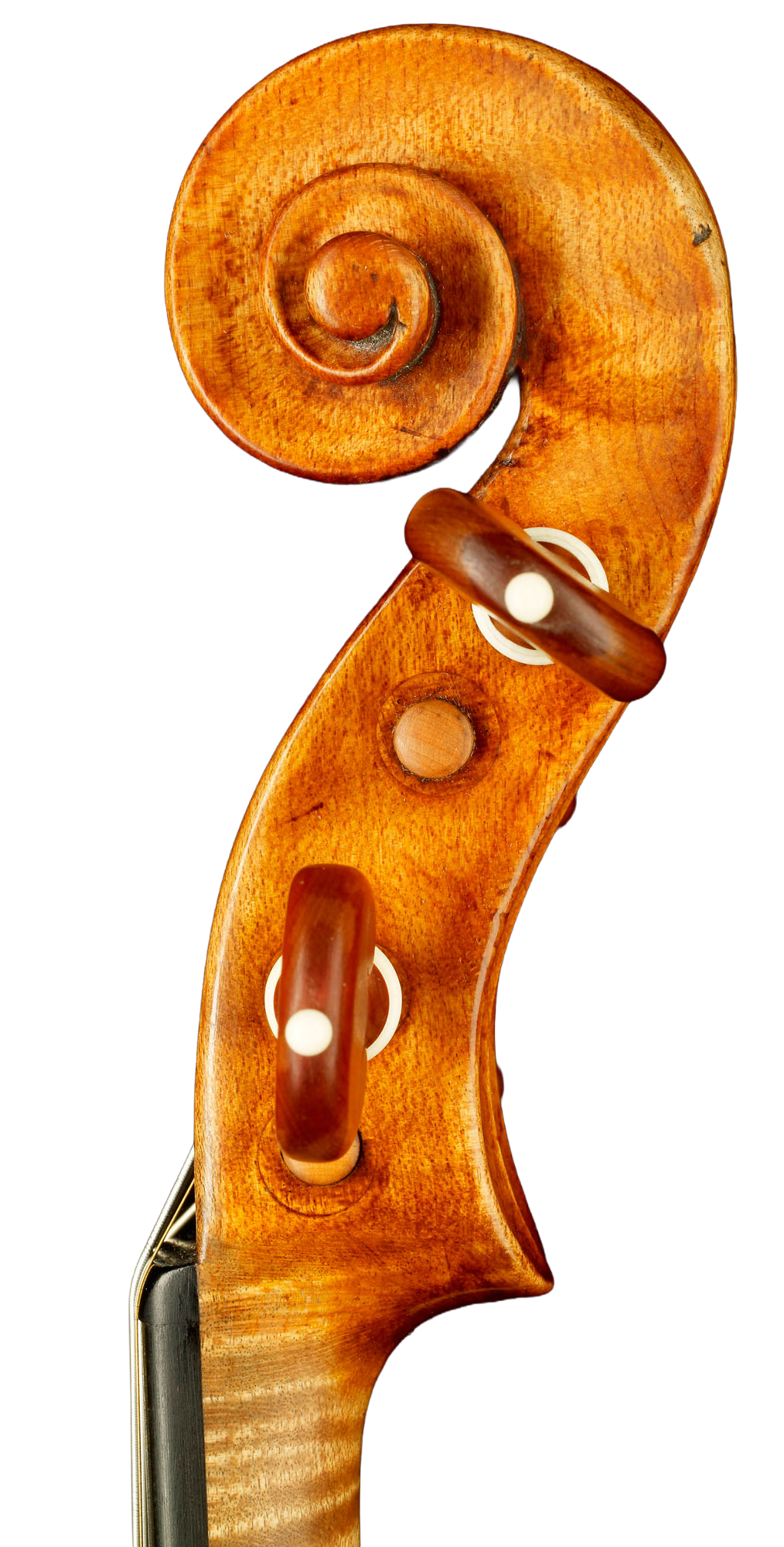
Giovanni Paolo Maggini | »Dumas«
Brescia, c. 1610
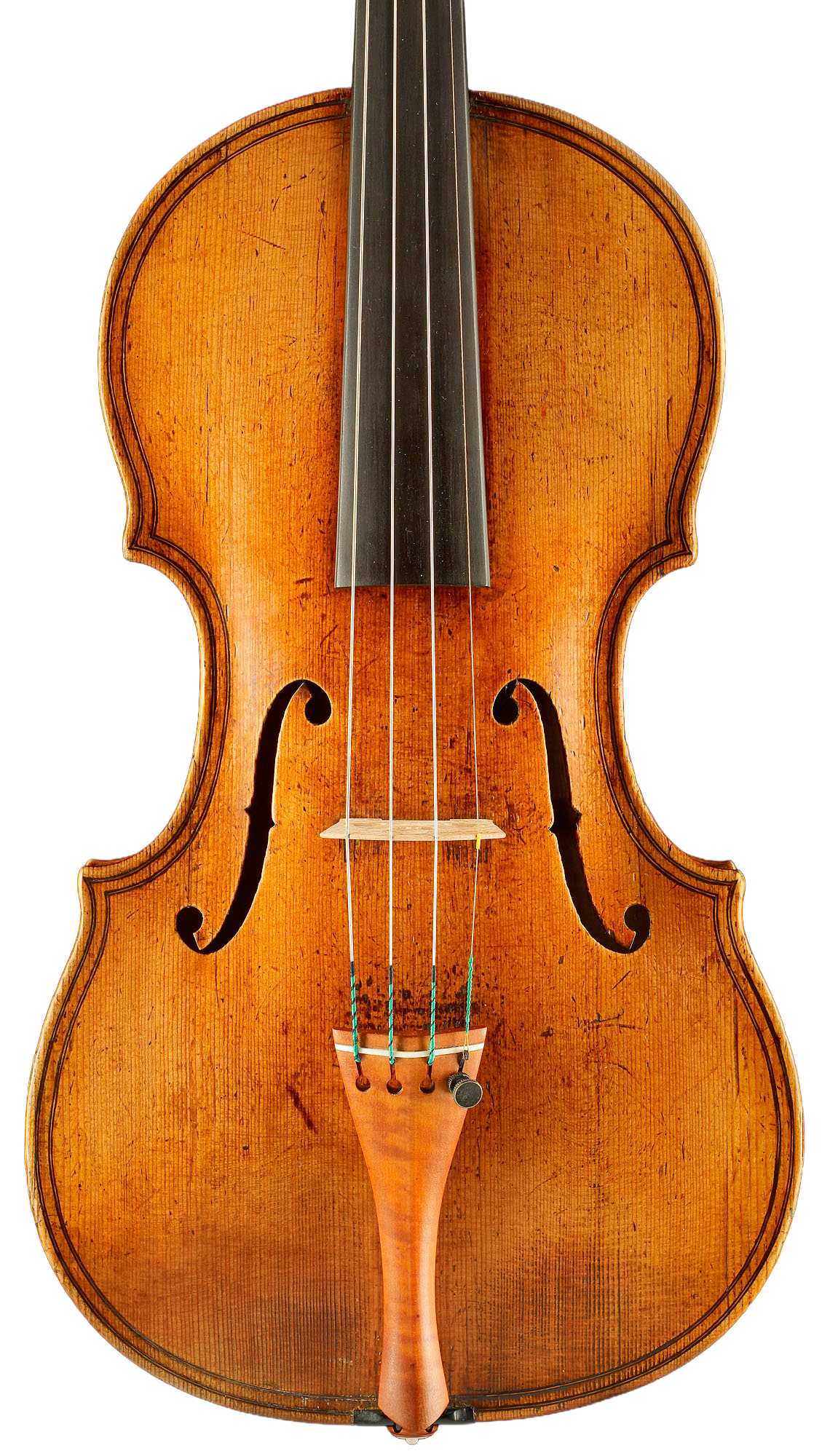
The so-called “Dumas” violin by Giovanni Paolo Maggini is among the most important surviving instruments of early Italian violin making. Made in Brescia around 1610–1620, it represents the distinguished tradition of a city that, even before Cremona rose to prominence, was one of the principal centres of European stringed-instrument making. Giovanni Paolo Maggini was the most important pupil of Gasparo da Salò and developed a highly distinctive style of his own. His instruments are characterised by generous proportions, deeply modelled arching and, frequently, double purfling – features that remain closely associated with the Brescian school.
The “Dumas” is regarded as one of the most famous Maggini instruments of all and was one of the very few violins to be specifically portrayed before the age of photography: no fewer than three such paintings were made in the late 19th and early 20th centuries. In Margaret Huggins’s 1892 monograph on Maggini, it was singled out as an exceptionally pristine example. The refinement of its workmanship was so remarkable that some contemporaries initially suspected it might be a modern forgery – a misconception firmly rejected by W. E. Hill & Sons in their certificate of authenticity, which dated the violin to around 1610–1620.
Its provenance can be traced continuously for more than a century. In the 1880s, it formed part of a rare five-piece Maggini ensemble – two violins, a viola, a cello and a small double bass – owned by the Dumas family at a château near Lyon, where Alfred Hill first encountered it. Described as the “pearl” of the collection, it was brought to London in 1890 and subsequently passed through several distinguished hands, including Baron Knoop, who retained it for twenty years, and the collector Richard Bennett. In 1958, Gerald Segelman finally acquired the instrument through W. E. Hill & Sons for £2,750.
The “Dumas” combines the powerful tonal language associated with Maggini with exceptional depth and warmth. It is particularly admired for its dark, projecting tone and rich resonance – qualities that have made Maggini violins highly sought after by soloists and collectors for centuries. Like many important historic instruments, this violin bears the name of a former owner and stands as an enduring example of the long European traditions of performance and collecting associated with the great Italian master instruments.
Photos: © Tarisio, New York
Violin
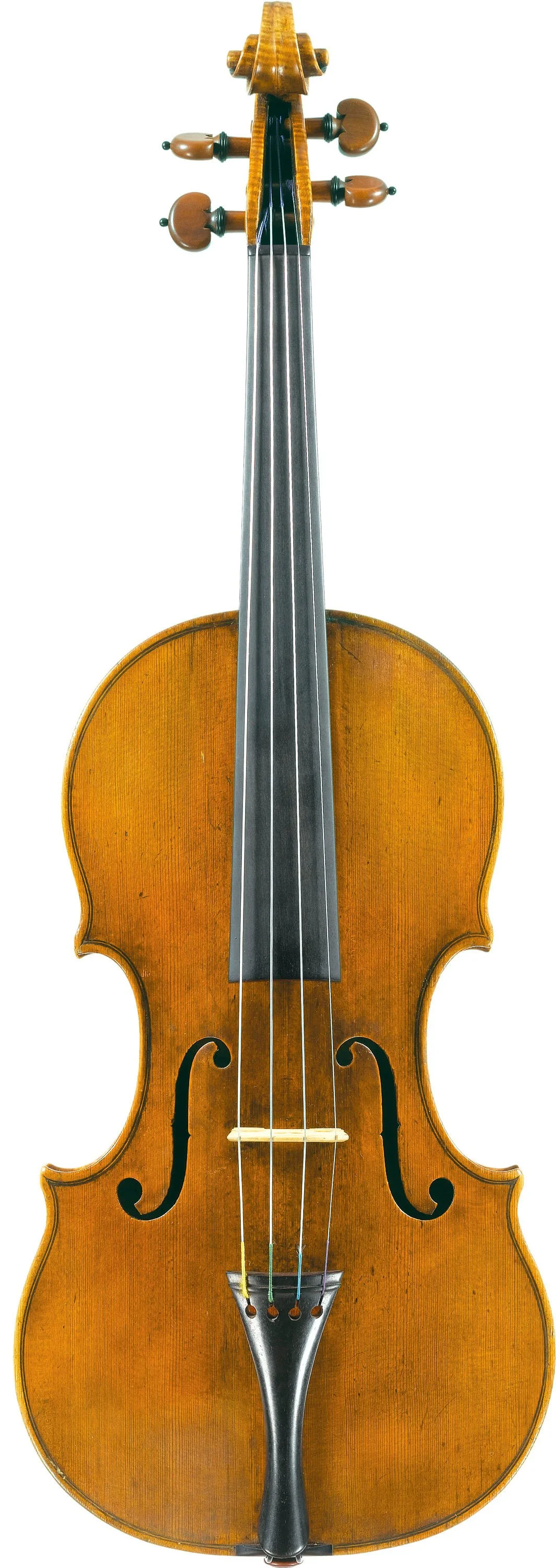
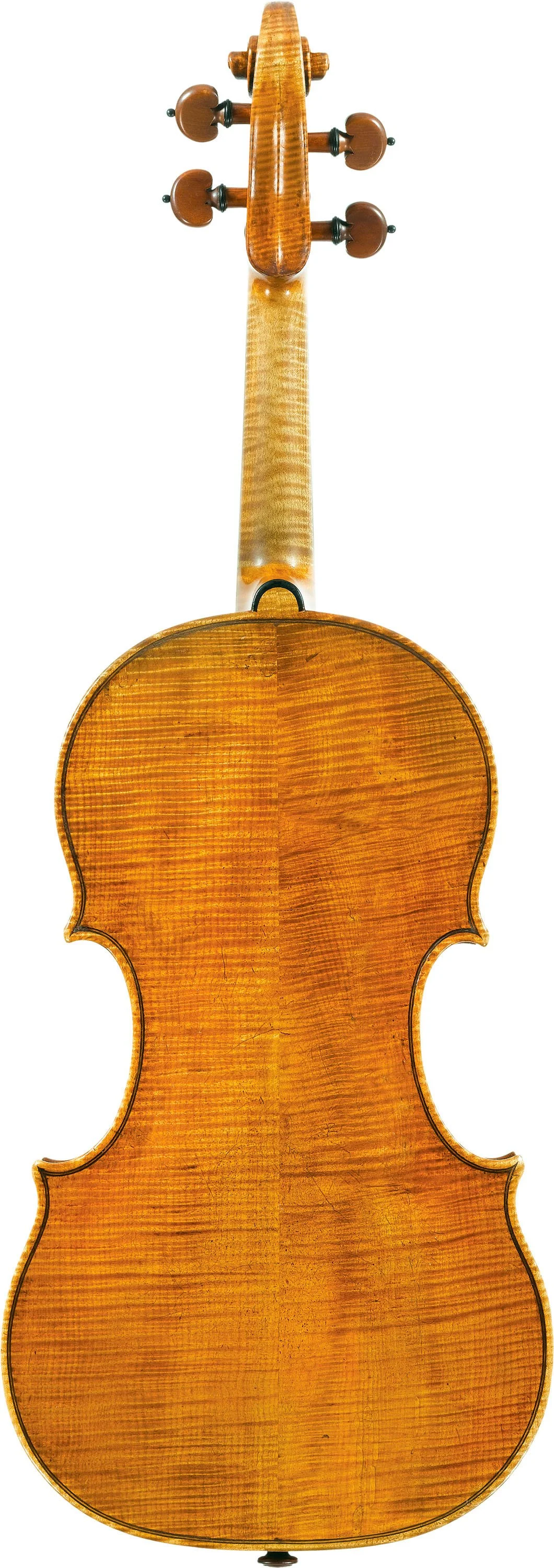
Nicolò Amati
Cremona, 1666
The violin by Nicolò Amati, made in 1666, dates from the later period of the distinguished Cremonese maker’s career and is among the particularly characterful instruments produced by his workshop. It combines the elegant lines of the Amati tradition with a remarkably powerful and well-balanced tonal character.
Especially striking is the exceptionally flamed maple used for the ribs, pegbox and scroll, whose lively figure is beautifully enhanced by the warm golden-brown varnish. The sides of the pegbox are worked somewhat flatter than is usual for Amati, allowing the spectacular figure of the wood to be seen to full effect from the front. The later graft to the head blends seamlessly with the original. The refined arching and harmonious proportions display the precision of craftsmanship that made Nicolò Amati such an influential model for generations of later violin makers.
In 1943, the violin was owned by Walter Rilla in London, who had acquired it through W. E. Hill & Sons – another transaction made during the war years. In 1952, it first passed to Gerald Segelman’s brother Oscar, who, however, was more enthusiastic about concertinas than violins, before entering Gerald’s own collection later that same year. In 1996, John Dilworth devoted an extensive article in The Strad to the instrument, examining its workmanship, arching, choice of wood and varnish in detail; the same issue was also accompanied by a large-format poster of the violin.
Despite its age, the instrument remains in remarkably fine overall condition. More substantial repaired wormholes are visible in the back, as well as a repaired bass-bar crack in the top, while the edges remain well preserved. The violin thus continues to offer an impressive testament to the tonal and artistic culture of 17th-century Cremonese violin making.
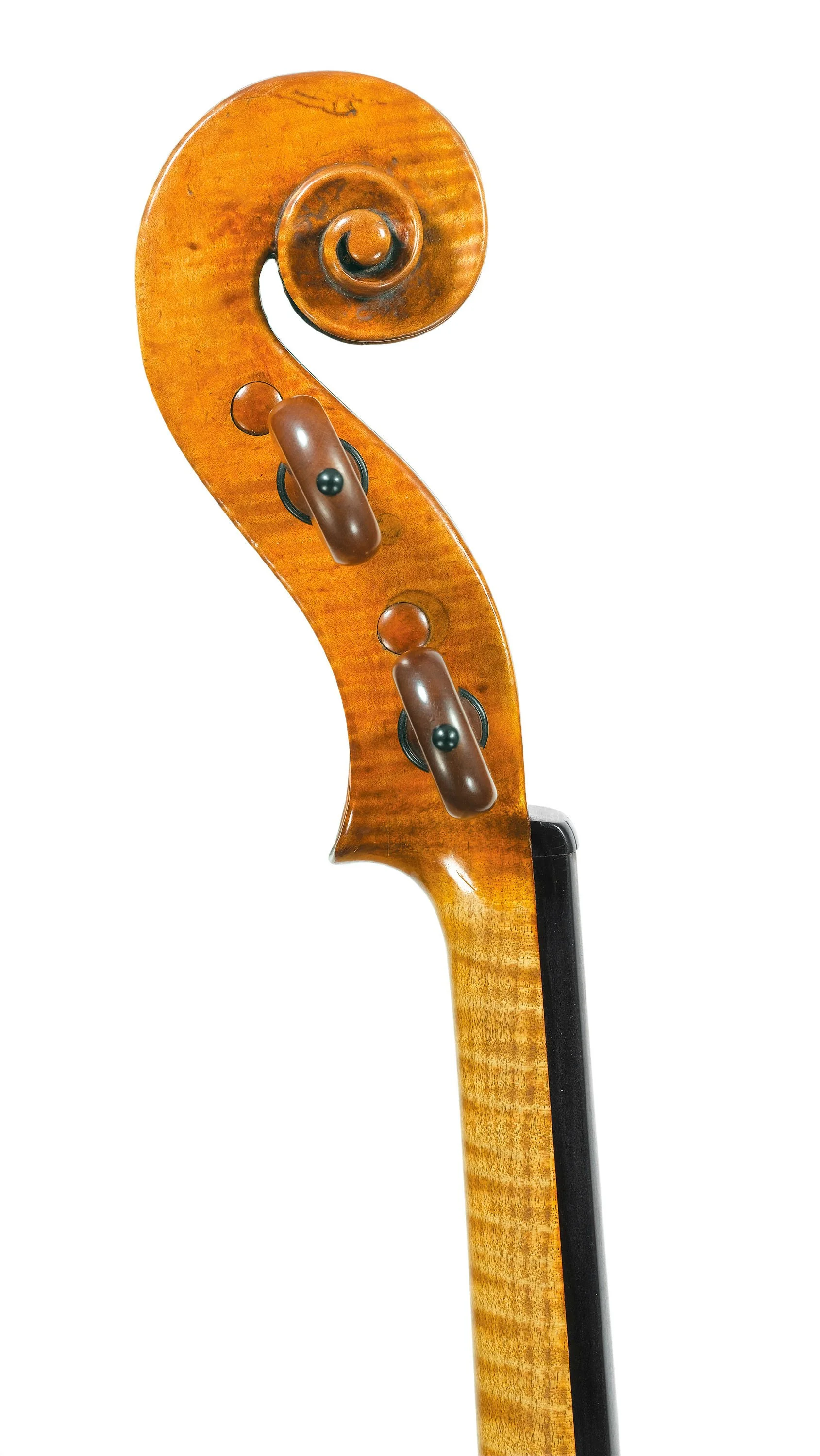
Photos: © Tarisio, New York
Violin
Lorenzo Storioni
Cremona, 1788
The violin by Lorenzo Storioni, made in 1788, is among the most striking examples of late Cremonese violin making. Storioni is regarded as one of the last important masters of the classical Cremonese tradition, carrying forward the great Italian art of violin making after Stradivari and Guarneri during a period of profound change.
A particularly unusual feature of this instrument is the decorative inlay of mother-of-pearl and ebony along the edges – a rare detail in 18th-century Cremonese violin making. Compared with the more restrained elegance of instruments such as the “Rode” Stradivari, the decoration appears relatively simple and was therefore probably added by another hand rather than by Storioni himself. Instead of covering the entire edge with ornamental elements, only the outer surfaces of the top and back were inlaid. The mother-of-pearl used comes from the European oyster and displays little of the internal structure or bluish iridescence associated with the abalone shell commonly used today. Such decoration is found on only a very small number of known Storioni instruments. A similarly ornamented example dating from 1786, with more finely executed inlay, was exhibited in Cremona in 1937. These details give the violin a highly distinctive and unmistakable appearance.
Despite its decorative elements, the violin remains entirely devoted to practical music-making. Contemporary descriptions particularly emphasise its powerful, dark and strongly contrasted tone, qualities characteristic of Storioni’s work. His instruments often combine an immediate response with considerable tonal depth and a highly individual personality.
The violin was sold at Puttick & Simpson in 1955 for £190 and thus entered the collection of Gerald Segelman, who obtained a certificate of authenticity for it later that same year. Its previous owners included C. Methley and a Miss B. de Mirimonde. Today, it is regarded as a rare and characterful testament to the final great phase of Cremonese violin making in the 18th century.
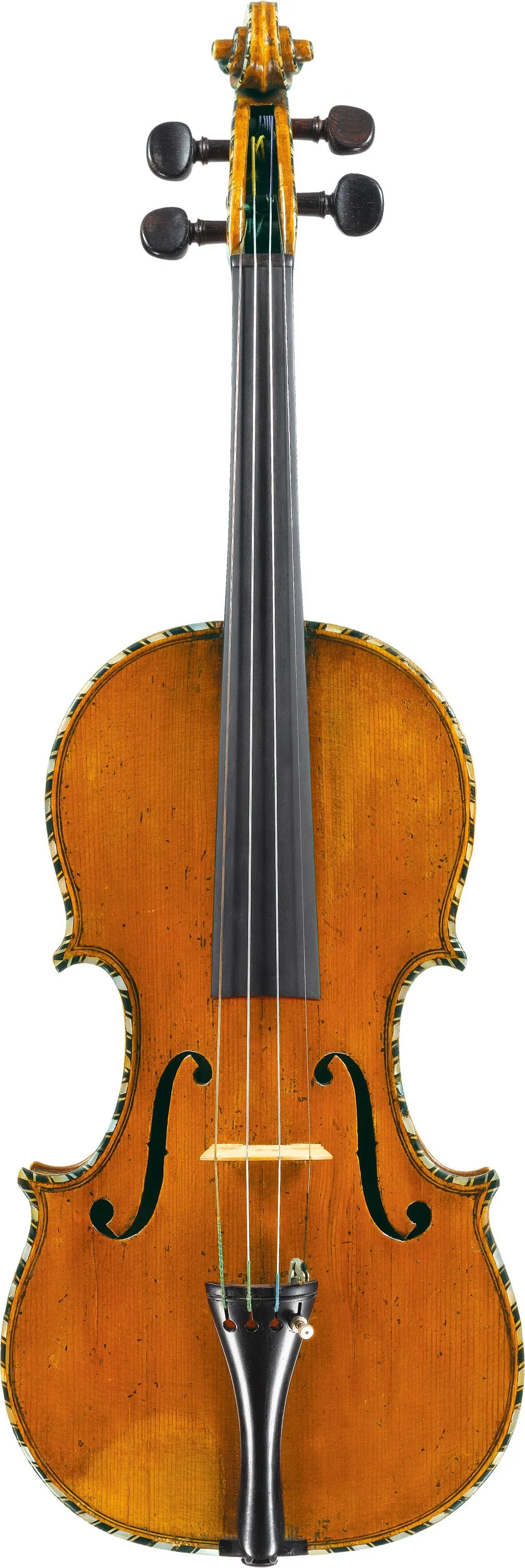
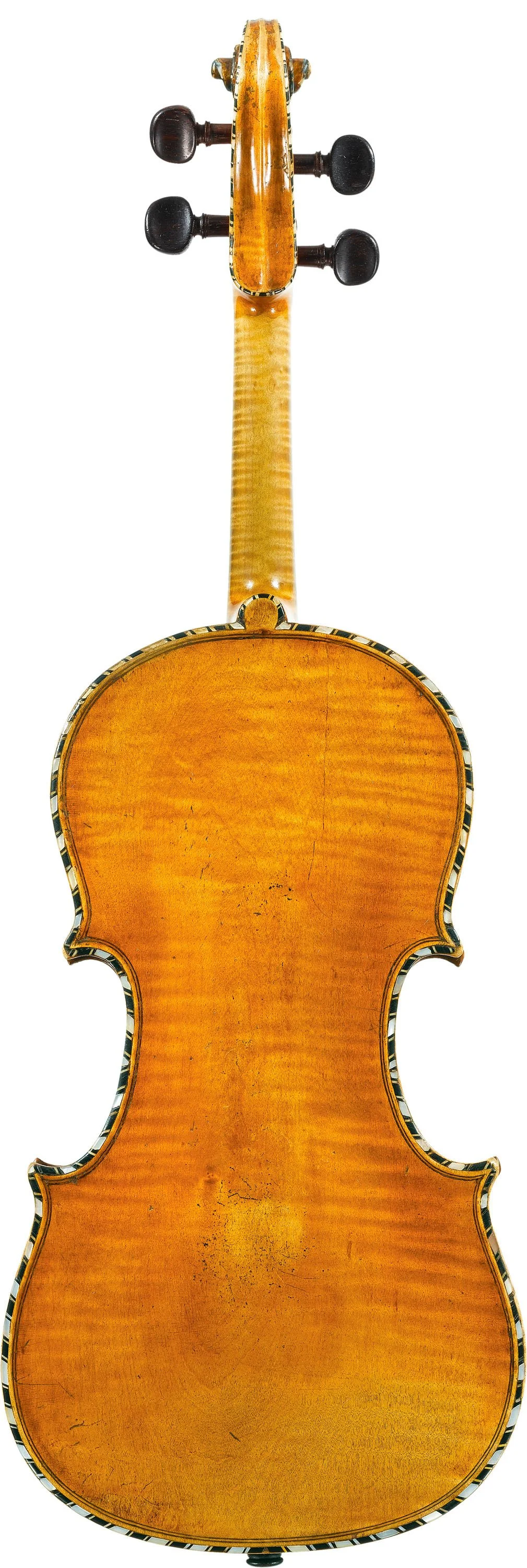
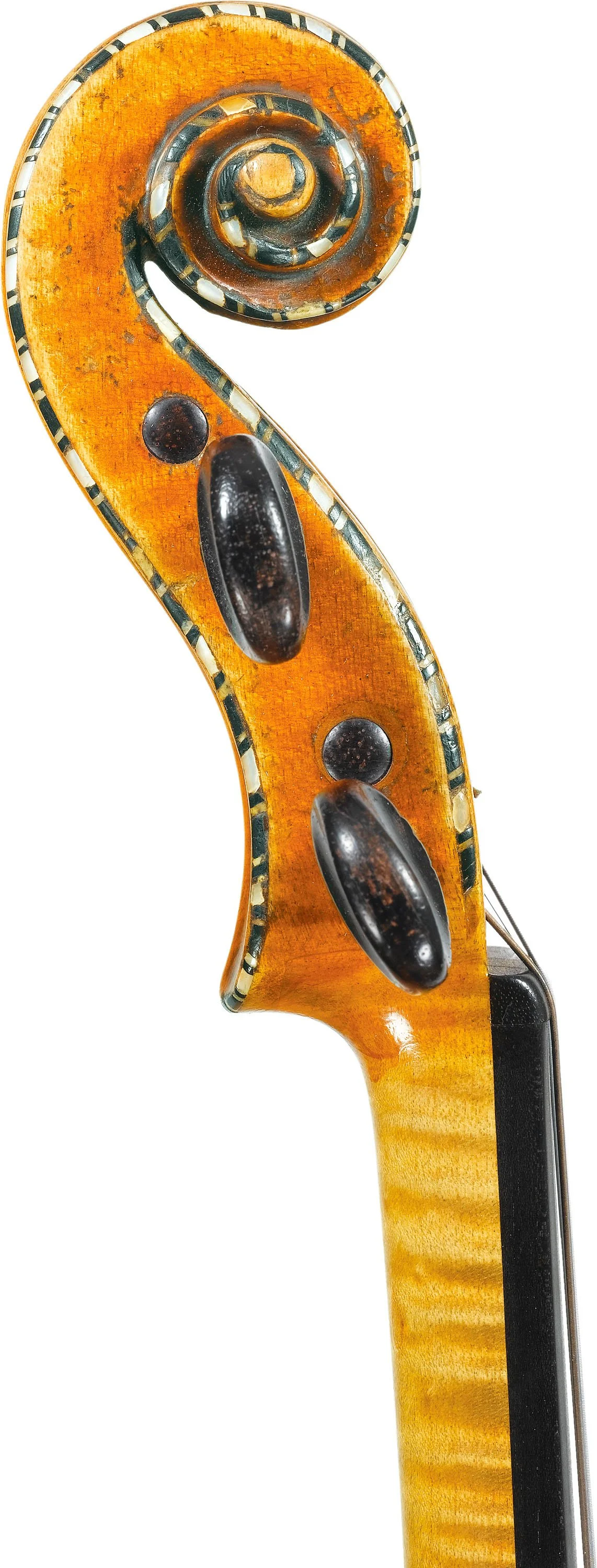
Photos: © Tarisio, New York
Violin
Jean-Baptiste Vuillaume
Paris, 1863
The violin by Jean-Baptiste Vuillaume, made in 1863, dates from the later period of the career of the foremost French violin maker of the 19th century. Vuillaume combined the highest standards of craftsmanship with an intensive study of the great Italian masters, particularly Antonio Stradivari. The instrument bears the number 2524 and was probably the last violin Vuillaume completed that year, as the next numbered work is already dated 1864.
The instrument belongs to a small group of violins modelled on the famous 1716 “Messiah” Stradivari, which Vuillaume copied several times during this period. Characteristic features include its elegant outline, finely worked arching and the deliberately asymmetrical positioning of the f-holes, which Vuillaume consciously reproduced from the historic original.
In 1945, Gerald Segelman acquired the violin from Albert Arnold for £180. It remained in his possession until his death and appears to have been particularly dear to him. When it was later recovered from his apartment, however, it was found in an extremely poor and neglected condition. In the final years of his life, Segelman had become increasingly reclusive and apparently no longer allowed violin makers to work on his instruments, while at the same time ceasing to care for them himself. Only after his death was the violin restored by Peter Westermann in Zurich, and it has since regained its remarkably fresh appearance. The only remaining visible sign of wear is slight damage to the edge of the top at the C-bout, probably caused either by awkward bowing or by an unusually high bridge used in the past. The originally carved tailpiece, whose presence is confirmed by a Hill certificate of authenticity, has unfortunately become separated from the instrument over time.
Like many of Vuillaume’s works, this violin combines great tonal clarity with projection and precision. His instruments were already highly valued by leading soloists during his lifetime and remain among the most important examples of 19th-century French violin making.
Photos: © Tarisio, New York
Violin
Antonio & Girolamo Amati | »Baron Knoop«
Cremona, 1590
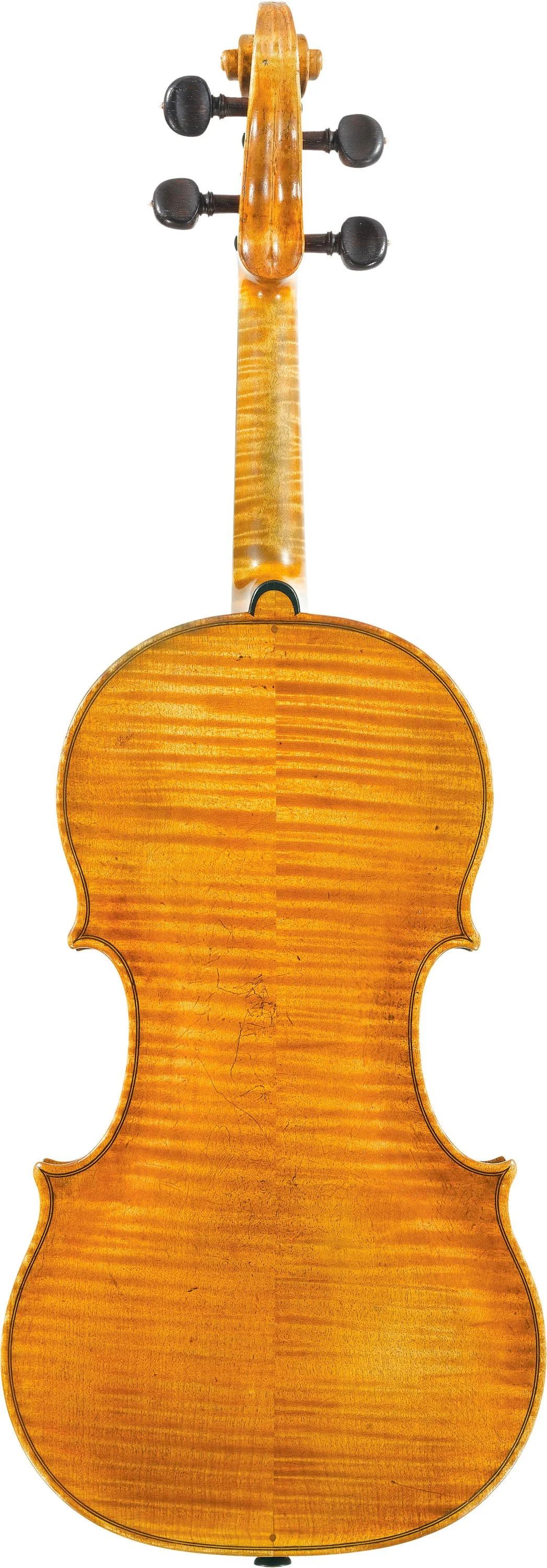
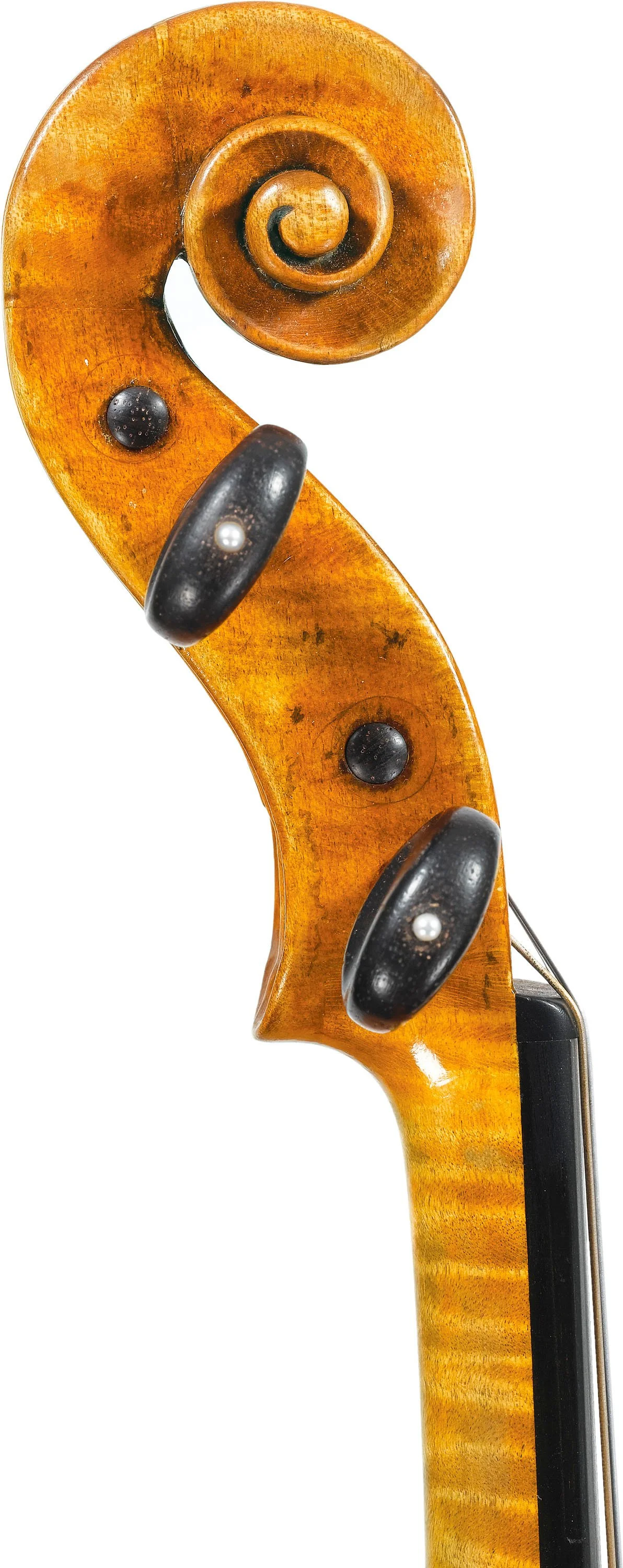
The so-called “Baron Knoop” violin by Antonio and Girolamo Amati was made around 1590 and is among the early masterpieces of Cremonese violin making. As the sons of Andrea Amati, Antonio and Girolamo continued the family workshop and played a decisive role in shaping the development of the violin into the form we know today. By the time Vivaldi was born, the instrument was already in existence, and when Bach composed his sonatas and partitas for solo violin, it was already around 130 years old.
Despite its great age, the violin displays remarkably fine and precise craftsmanship and survives in an exceptionally fresh state of preservation. Beneath the clear, transparent varnish, the grain of the wood remains visible throughout; the label is still clearly legible, and even small tool marks left by the maker on the scroll have survived. Particularly characteristic are the elegant outline, carefully shaped arching and warm golden varnish that give instruments of the early Amati school their distinctive visual presence.
The violin takes its name from the distinguished collector Baron Johann Knoop, whose collection was among the most celebrated private collections of string instruments of the early 20th century. His father had established an important textile business in Estonia before the family moved to England around 1900. Many of the most significant Italian master instruments passed through Knoop’s collection and continue to bear his name today. Before entering his possession, the violin had belonged, among others, to an English amateur violinist named Way. After passing through several further hands, it eventually entered Gerald Segelman’s collection in 1943.
Instruments by the Amati brothers are valued for their clear, refined and exceptionally singing tone. At the same time, they embody the elegance and lightness that came to define early Cremonese violin making and later served as an important model for masters such as Stradivari and Guarneri.
Photos: © Tarisio, New York
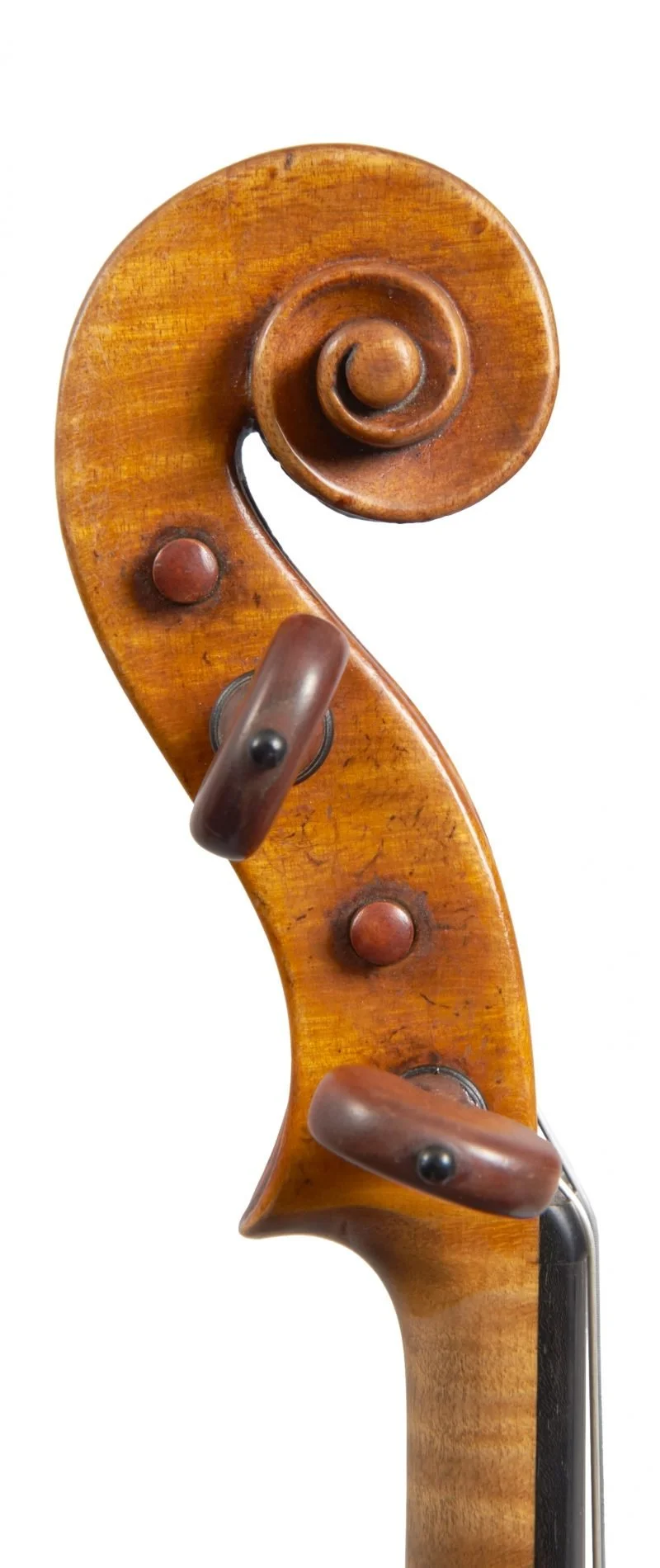
Violin
Nicolò Amati
Cremona, 1658
Nicolò Amati, born in 1596 as the son of Hieronymus Amati, was the only surviving male member of the family after the devastating plague years of the 1630s and thus assumed sole responsibility for carrying forward Cremona’s firmly established tradition of violin making. While his grandfather Andrea is generally regarded as the true originator of the violin, it was Nicolò who brought the craft to a new height of refinement and elegance in the mid-17th century. Until his pupil Andrea Guarneri established his own workshop in 1653, Nicolò was the only active violin maker in Cremona – and without him, it is often observed, there might well have been no Antonio Stradivari, who is traditionally considered to have been among his pupils.
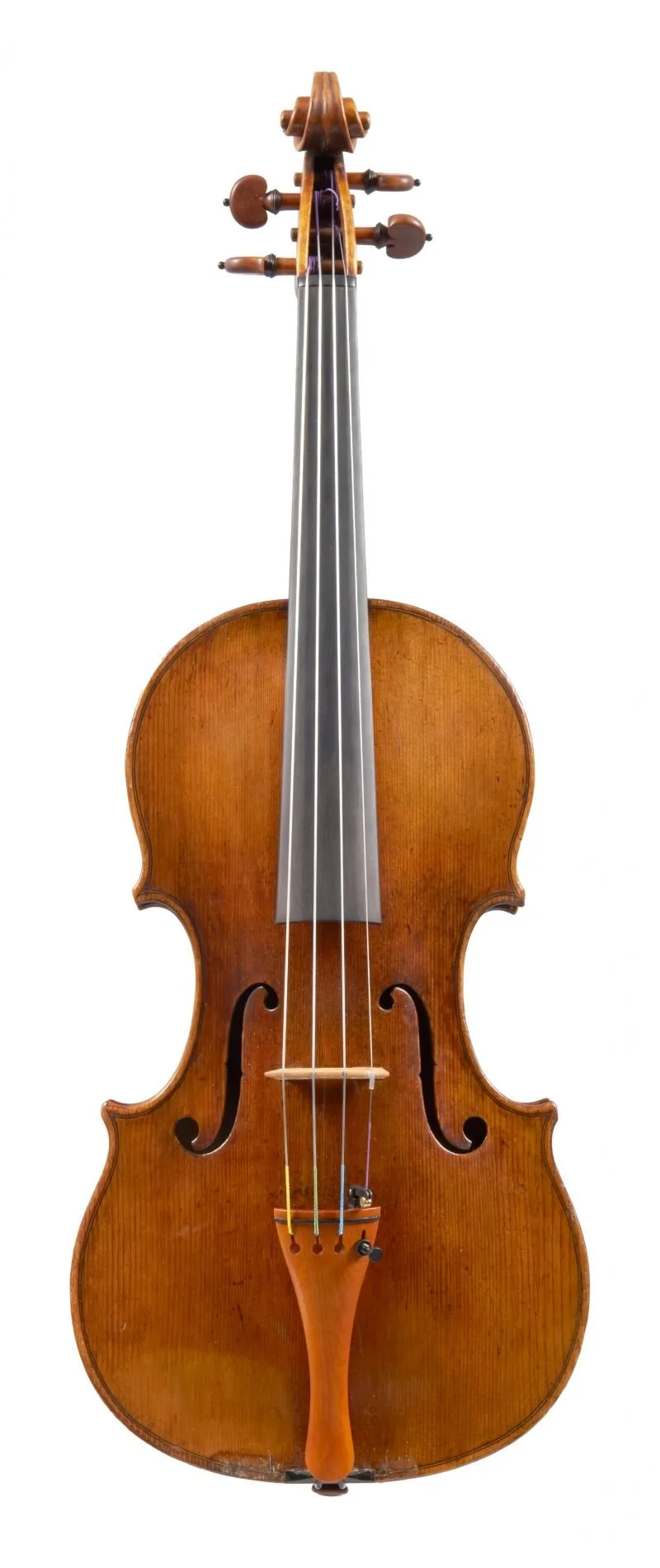
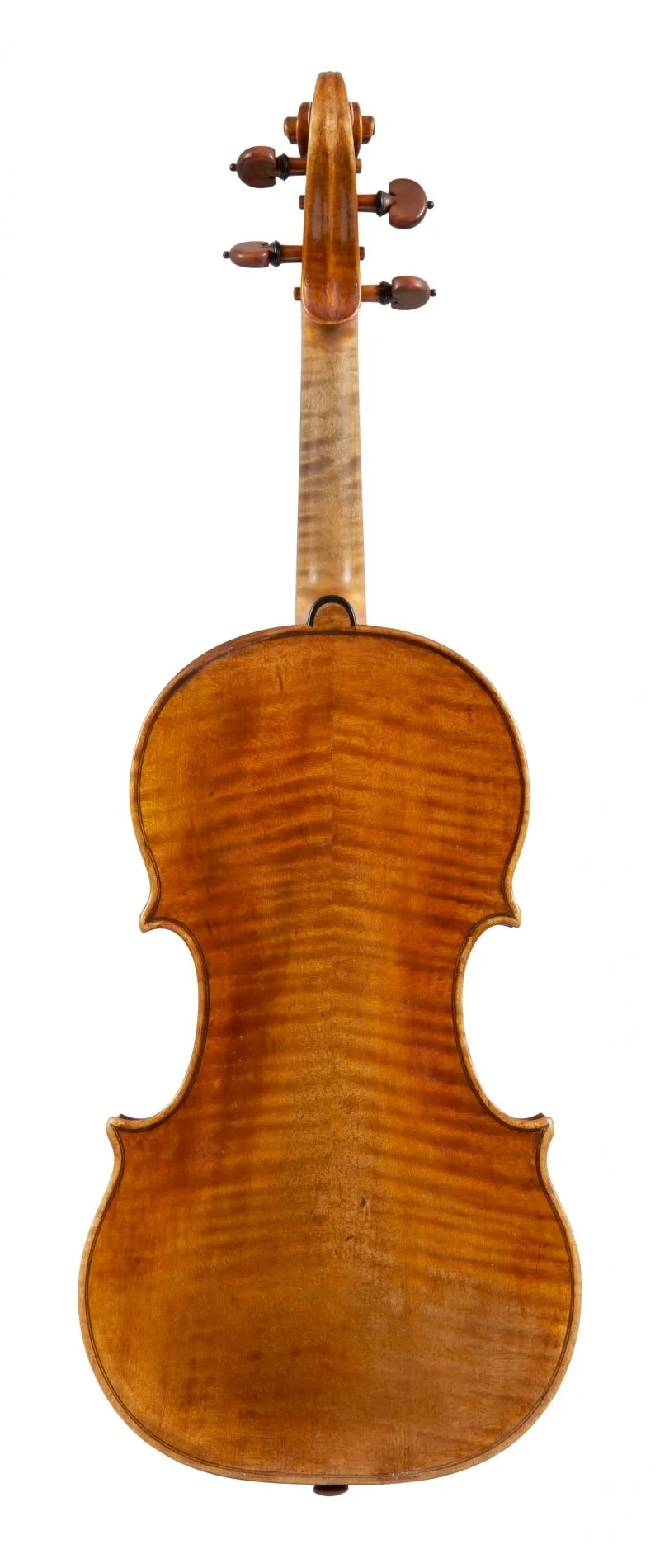
The violin presented here, dated 1658, shows Amati at the height of his powers. It was made on his celebrated “Grand Pattern” model, with a two-piece back of carefully selected, strongly flamed quarter-sawn maple and a top formed from two meticulously joined pieces of spruce. The arching flows in an organic, almost textile-like manner, as though draped like silk over the ribs – a characteristic feature of Nicolò’s work that Stradivari would later develop further through flatter, more restrained arching. The f-holes likewise reveal the stylistic evolution of the Amati family: from the delicate, almost pointed forms used by his grandfather Andrea and his father Hieronymus to Nicolò’s bolder and more broadly flared design, which in turn provided Stradivari with a point of departure for his own further development.
Another characteristic feature is the strongly coloured purfling, elegantly drawn into long points, cleanly executed and slightly offset at the corners. Inside the body, as on many Amati instruments, there is a small hole in the centre of the back – a characteristic detail of the Amati workshop whose precise purpose has never been fully established. Finally, the varnish displays the deep golden-brown glow and remarkable sense of depth typical of Nicolò Amati, although it is less intense than the later, richly red varnishes associated with Stradivari.
Photos: © Ingles & Hayday, London
Further Selection of Violins:
Tommaso Carcassi Firenze, 1751
Alessandro Gagliano Napoli, c. 1740
Ferdinando Gagliano Napoli, 1785
Nicolò Gagliano Napoli, c. 1750
Francesco Gobetti Venezia, 1717
Giuseppe Guarneri filius Andrea Cremona, c. 1695
Pietro Antonio Landolfi Milano, 1770-75
Giovanni Battista Rogeri Brescia, 169000
Francesco Rugeri Cremona, 1675
Vincenzo Rugeri Cremona, c. 1710
Giovanni Tononi Bologna, c. 1705
Jean-Baptiste Vuillaume Cannon, Paris, c. 1870
A complete overview of all available instruments, including those currently on loan, is available upon request by email
Viola
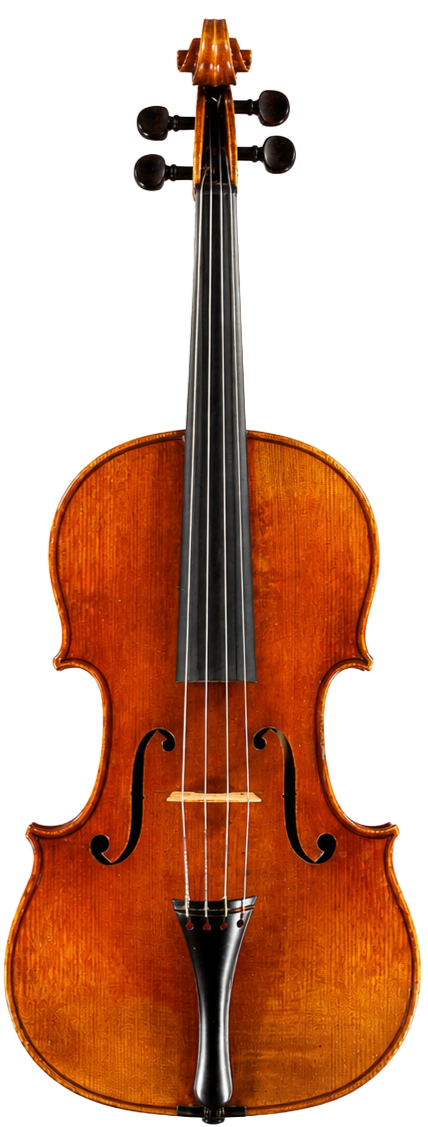
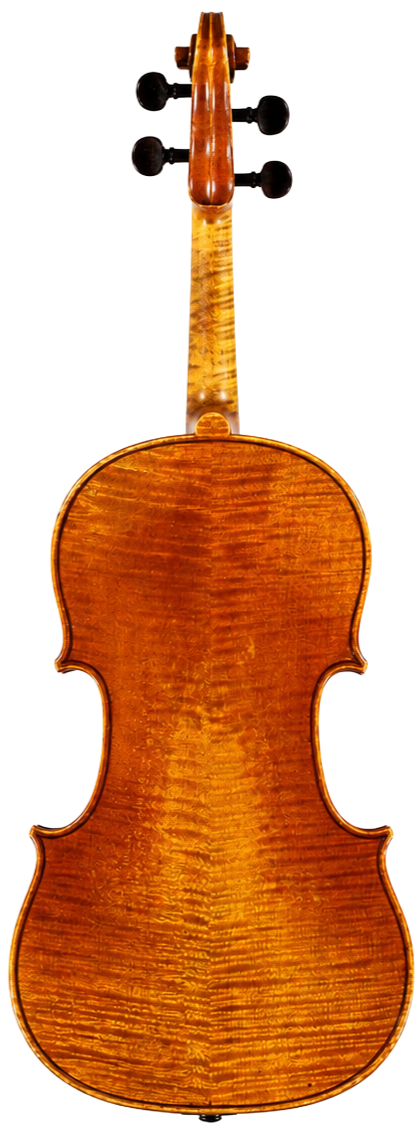
Jean-Baptiste Vuillaume
Paris, 1874
The viola by Jean-Baptiste Vuillaume, made in 1874, dates from the later period of the career of the foremost French violin maker of the 19th century. Vuillaume combined the highest standards of craftsmanship with a profound knowledge of the great Italian masters, creating instruments that continue to rank among the finest achievements of French violin making.
The viola follows the Stradivari model and bears Vuillaume’s internal workshop number 2994, together with the date 1874. Characteristic features include its luminous orange-red varnish, two-piece back of medium-flamed maple and finely grained spruce top. With a body length of 406 mm, it is one of the very few large-format violas known from Vuillaume’s workshop. According to Roger Millant’s standard monograph on Vuillaume, published in 1972, the maker was believed to have produced only one viola with a body length exceeding 400 mm, in 1858. This instrument is therefore among the further examples of this rare large model to have become known since then.
Segelman acquired the viola at Puttick & Simpson in 1961 for £340, initially without an accompanying certificate of authenticity, and subsequently had it certified by W. E. Hill & Sons. Several certificates survive today, the most recent issued by Serge Boyer in Paris in 2007. Apart from minor repairs to the edges and corners, and a small area of artificial figure on the rib created with acid or dark stain, the instrument is largely unrestored and remains in excellent condition.
Vuillaume’s instruments were already highly valued by leading soloists and collectors during his lifetime. His work is distinguished by great tonal clarity, immediate response and exceptionally meticulous craftsmanship. His violas in particular are today regarded as rare and highly sought-after examples of 19th-century French master violin making.
Photos: © Tarisio, New York
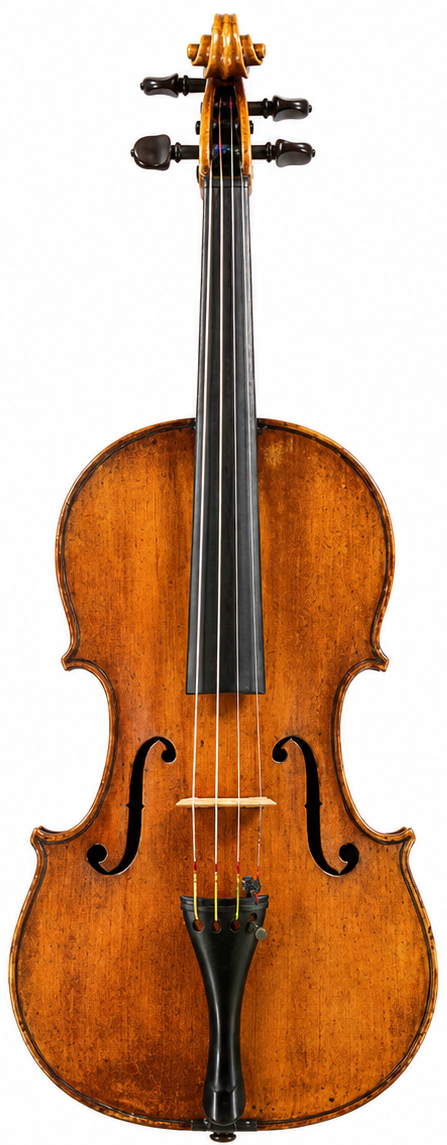
Viola
Giovanni Battista Gabrielli
Firenze, c. 1770
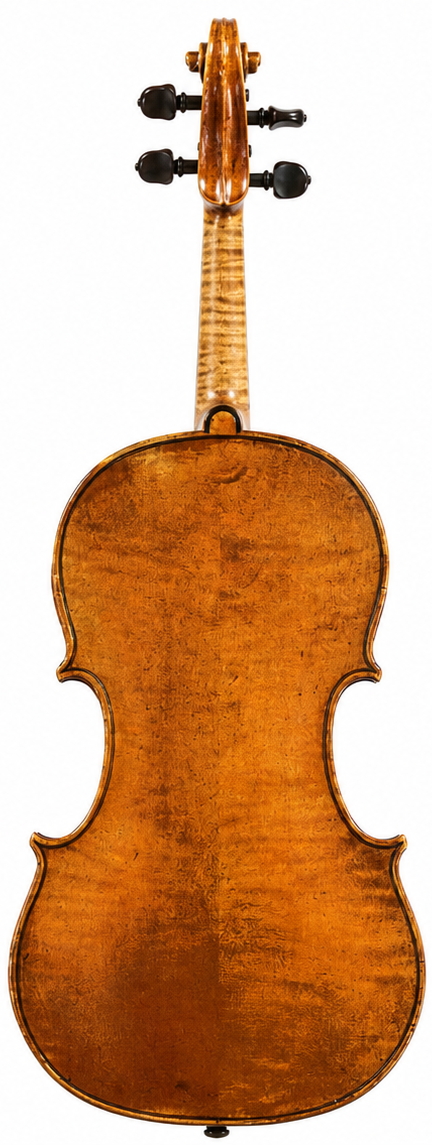
The viola by Giovanni Battista Gabrielli was made in Florence around 1770 and is among the rare surviving works of this important 18th-century Florentine violin maker. With a body length of 40.5 cm, the instrument combines tonal depth and projection with well-balanced playing characteristics.
Gabrielli, born in Florence in 1716 and active there until his death in 1771, is regarded as the leading representative of the Florentine school of violin making and was probably the teacher of the Carcassi brothers. He may have received his training in the workshop of Bartolomeo Cristofori – better known as the inventor of the piano – who had previously worked in the Amati tradition in Cremona before entering the service of the Medici court in Florence. In contrast to Cristofori’s more Cremonese-influenced work, Gabrielli consistently followed the model of Jacob Stainer, whose style remained highly influential in 18th-century Florence.
Characteristic features of Gabrielli’s instruments include powerful but rarely exaggerated arching, well-controlled proportions and elegantly cut f-holes that combine elements of Stainer’s style with the Italian tradition. He consistently used high-quality wood and a transparent varnish, generally ranging from pale yellow to reddish tones. His violas and cellos are regarded by connoisseurs as among his finest works and continue to be particularly highly valued.
Tonally, the viola is distinguished by a warm, dark sound with rich resonance and clear projection. Its medium size provides a remarkable balance between tonal richness and ease of handling. Violas by Giovanni Battista Gabrielli are rare today and are prized both for the quality of their craftsmanship and for their distinctive tonal character.
Photos: © Tarisio, New York
Viola
Philippe Girardin
Neuchâtel, 2009
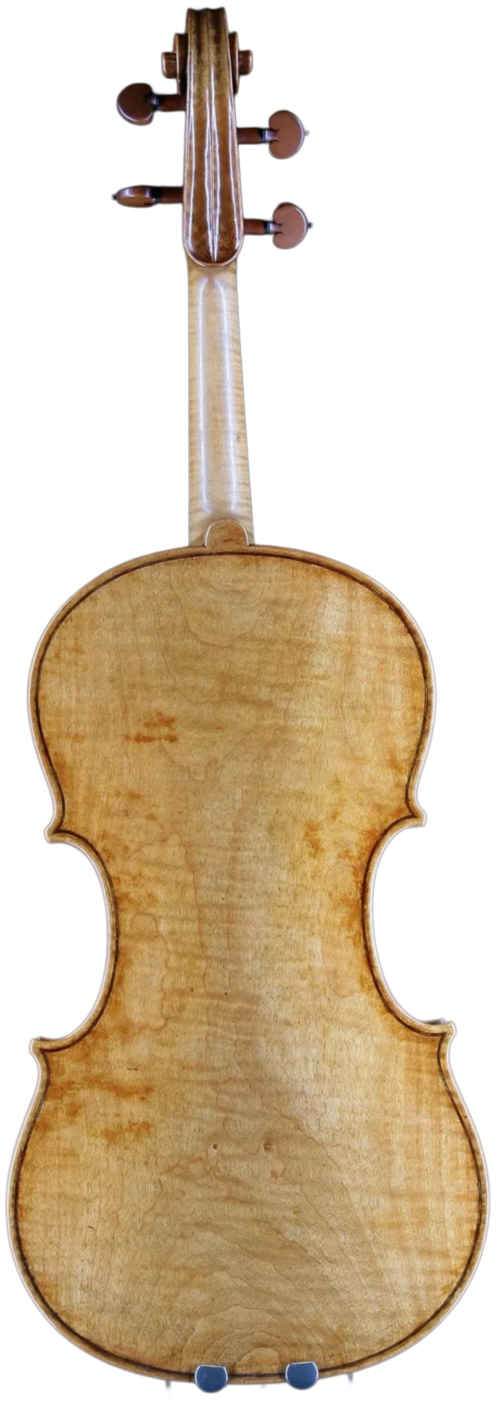
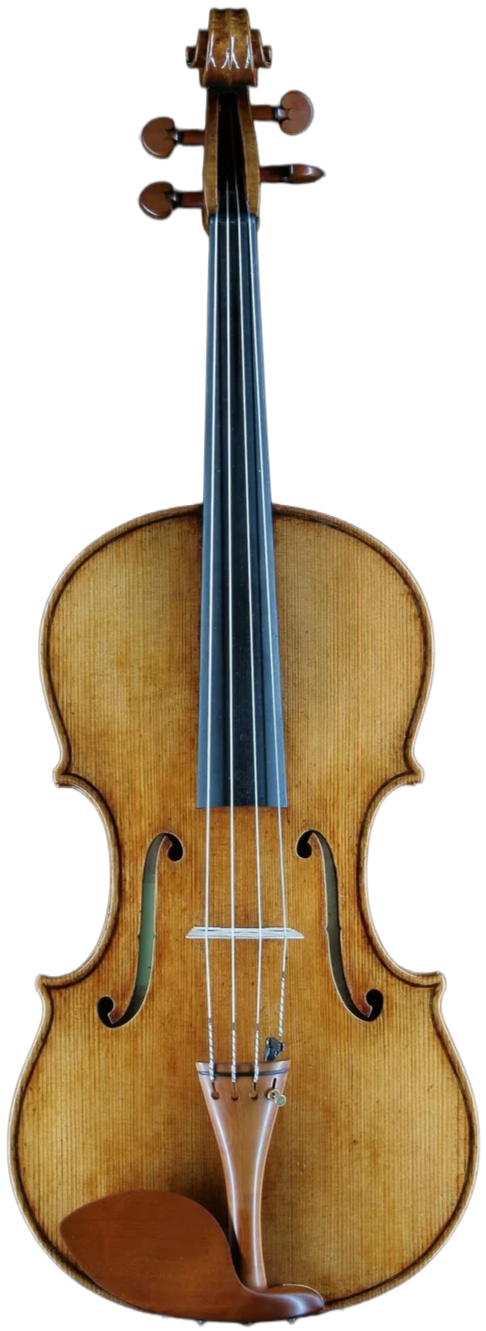
The viola by Philippe Girardin was made in Neuchâtel in 2009 and is an outstanding example of modern European violin making at the highest level of craftsmanship. Girardin is regarded as one of Switzerland’s leading contemporary makers and combines traditional principles of construction with a clear and distinctive personal style.
With a body length of 42.3 cm, the instrument offers the tonal depth and projection of a large concert viola while retaining remarkable balance and responsiveness. Girardin’s violas are particularly valued for their warm tonal character, clarity and considerable flexibility of sound.
The careful selection of materials, together with the precise relationship between arching and wood, gives the instrument a broad and nuanced tonal palette as well as great expressive potential – qualities that have earned Philippe Girardin’s work significant international recognition.
Cello
Matteo Gofriller
Venezia, c. 1720
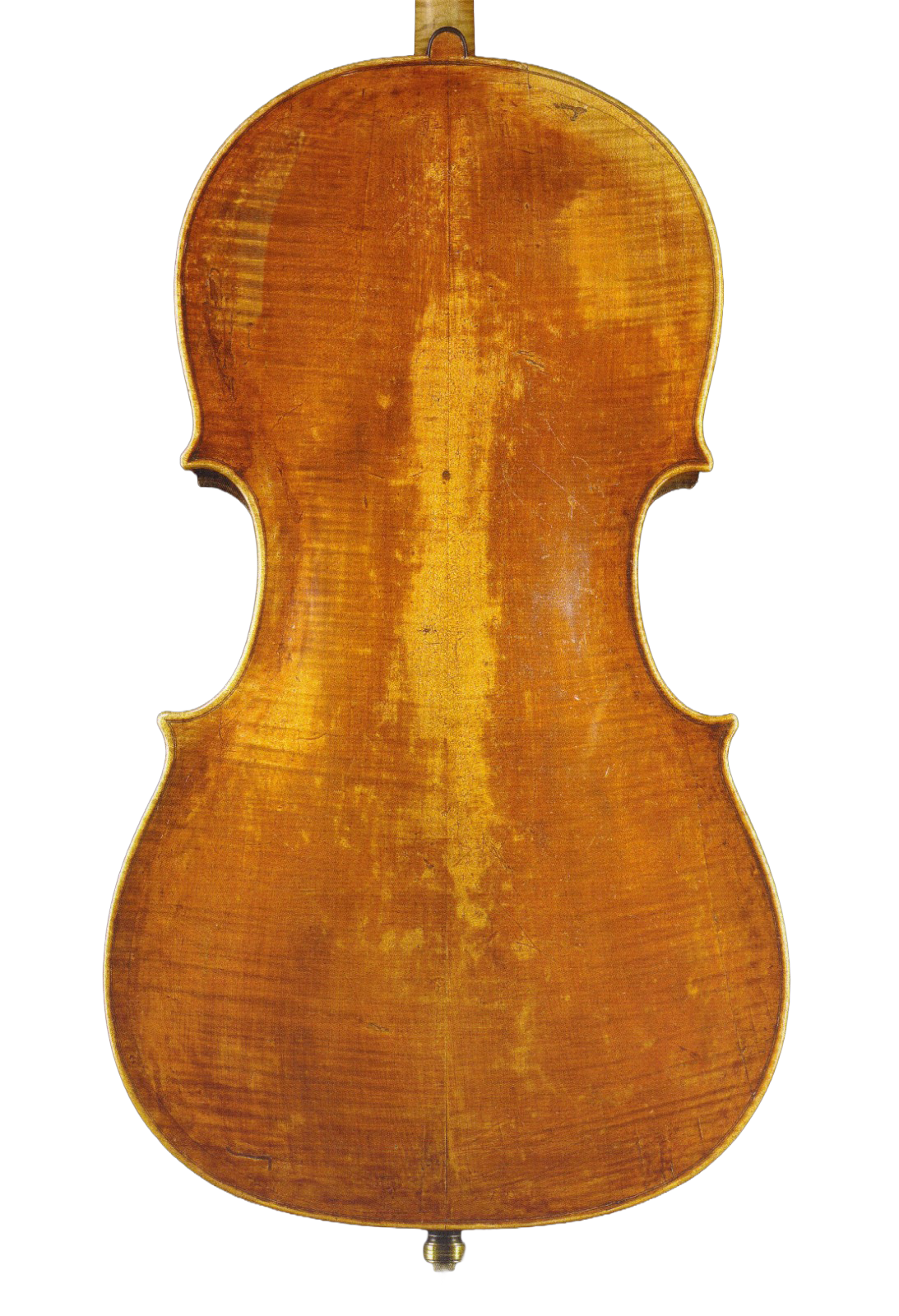
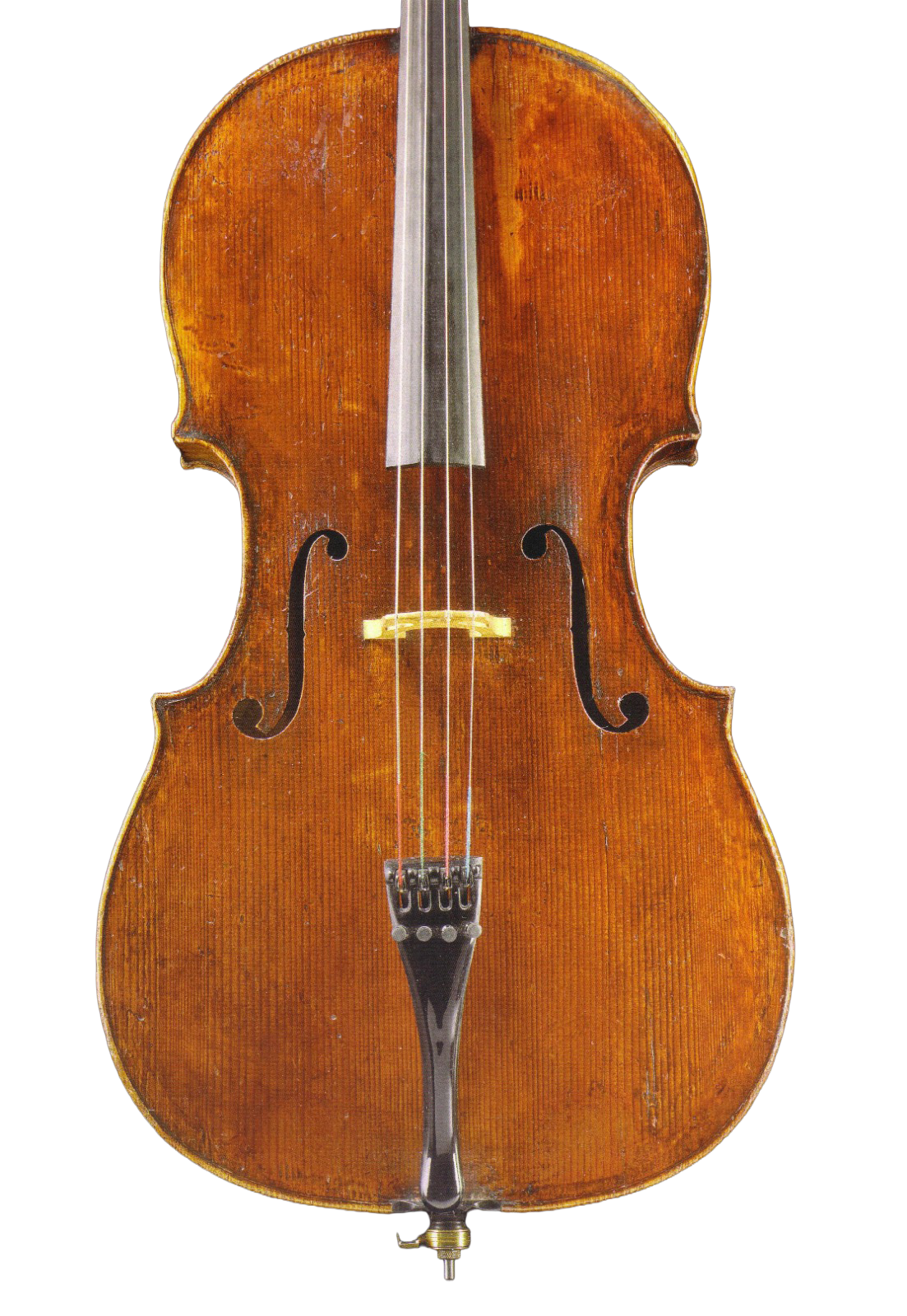
The cello by Matteo Gofriller, dating from around 1720, is among the outstanding examples of early 18th-century Venetian violin making. Gofriller is regarded as the foremost cello maker of the Venetian school and had a lasting influence on the development of the modern violoncello.
Born in Brixen in South Tyrol in 1659, Gofriller probably moved to Venice around 1685, where he took over the workshop of his father-in-law, Martin Kaiser, and continued working until his death in 1742. His early instruments still reveal traces of the South German and Austrian tradition, but his later work demonstrates such a profound familiarity with Italian violin making that he was at times believed to have trained with Stradivari or Bergonzi. Domenico Montagnana, the other great master of the Venetian school, is considered to have been his pupil.
Characteristic features of Gofriller’s instruments include powerful modelling, generous arching and a deep, luminous reddish-brown varnish. His cellos are particularly prized for their warm, dark yet exceptionally projecting sound, combining great tonal depth with an immediate response. These qualities are associated above all with the relatively low, powerful arching and broad table of his generally large-format cellos, many of which were later reduced in size for modern use.
In contrast to the more formalised Cremonese tradition, Gofriller’s work often displays a freer and more individual approach, giving his instruments a distinctive personality. One of the most famous examples is a Gofriller cello of 1733, played by Pablo Casals as his principal instrument from 1913 until his death in 1973 and for many years mistakenly attributed to Bergonzi. Cellists including Emanuel Feuermann, János Starker, Pierre Fournier and Yo-Yo Ma have also played instruments from Gofriller’s workshop.
This cello stands as an outstanding example of the flourishing of Venetian violin making in the early 18th century and ranks among the important historic concert instruments of its period.
Cello
Riccardo Antoniazzi
Milano, 1894
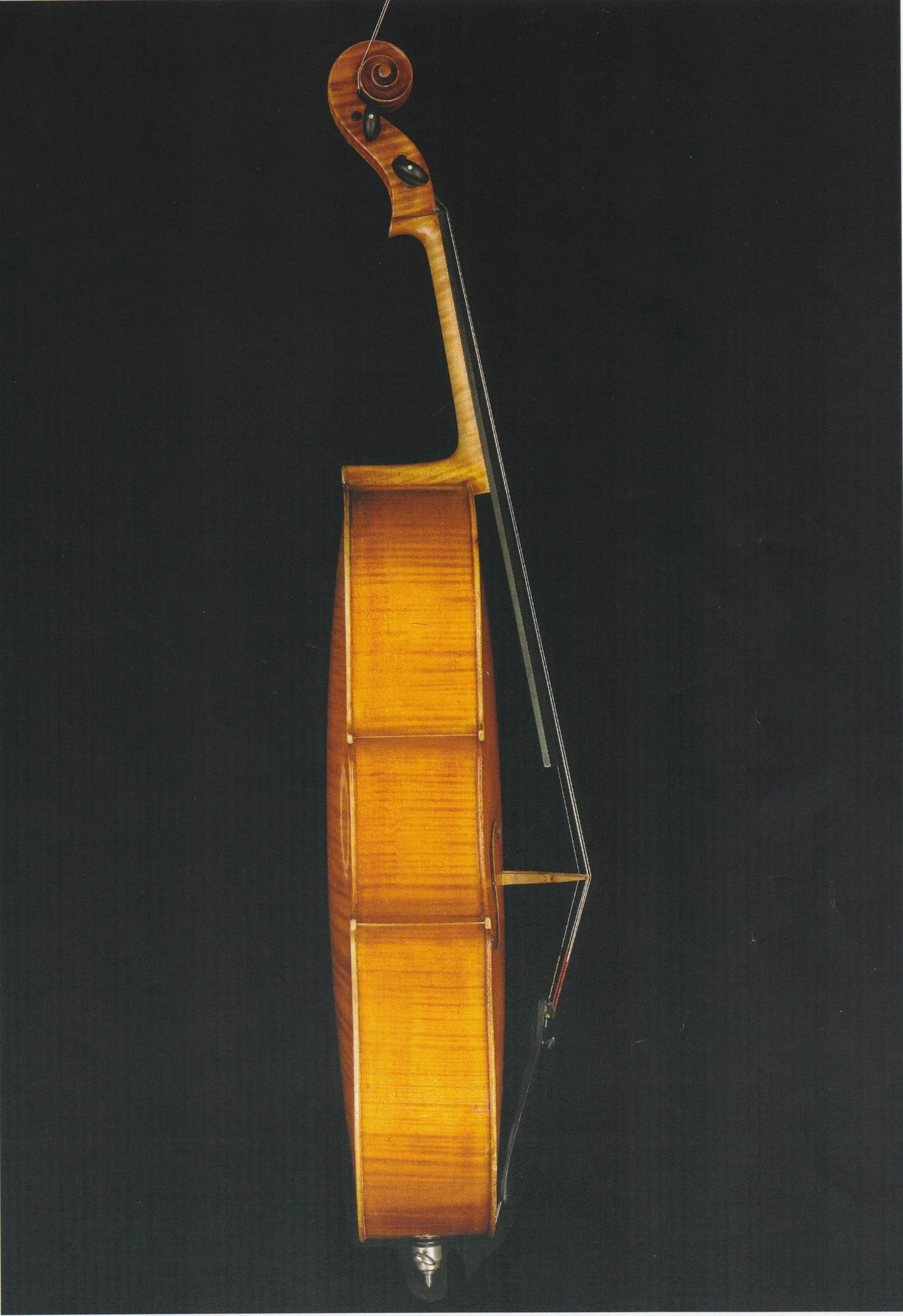
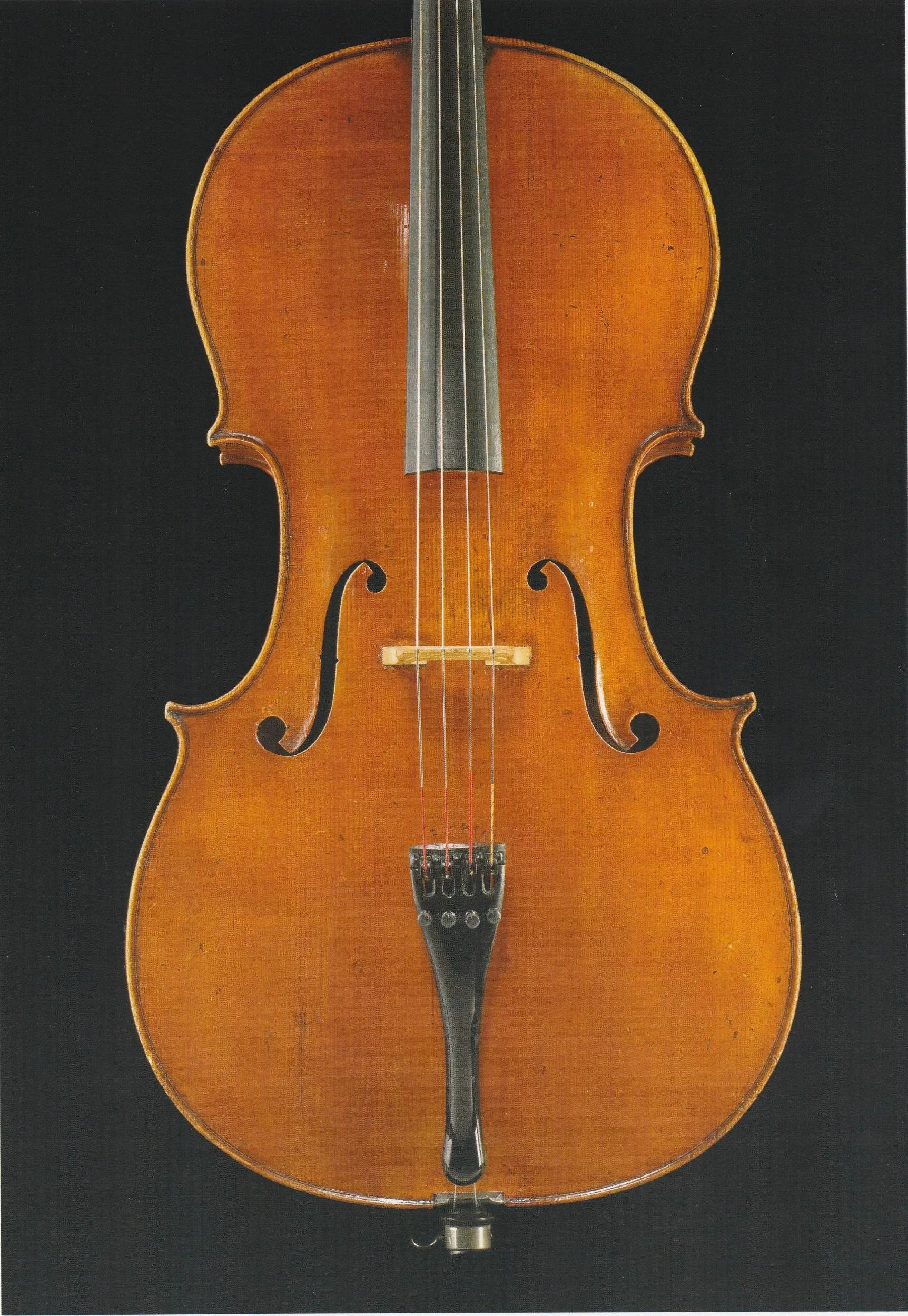
The cello by Riccardo Antoniazzi, made in 1894, dates from the most important period of the Milanese maker’s career and is a characterful example of the modern Lombard school. Born in Cremona in 1853, the son and pupil of the violin maker Gaetano Antoniazzi, Riccardo Antoniazzi is regarded as one of the defining figures of late 19th-century Italian violin making. He played a major role in transferring Cremonese expertise to Milan and in shaping the development of the modern Milanese school.
The instrument was made during the period in which Antoniazzi worked in close association with the workshop of his former pupil Leandro Bisiach – his most productive and creative phase, which lasted until around 1904. Since many of Antoniazzi’s instruments from these years remained unsigned or were sold under Bisiach’s name, his own contribution was long overshadowed. Characteristic features of his work include powerful modelling, finely cut f-holes and a warm orange to reddish-brown varnish.
Antoniazzi’s cellos are distinguished by strong projection, immediate response and a warm, focused tonal character. His instruments combine the Italian tradition of the 18th century with the freer and more individual stylistic language of the late 19th century. Works from the 1890s in particular are today regarded as representing the height of his career.
Riccardo Antoniazzi was also an important teacher and influence on a new generation of Milanese violin makers, including Ferdinando Garimberti and Gaetano Sgarabotto. From 1904 onwards, he worked for the firm of Monzino & Sons before his death in Milan in 1912.
Further Selected Cellos:
Vincenzo Sannino Napoli, c. 1900
Attr. Giuseppe Rocca Torino
Nicolas François Vuillaume Bruxelles, 1862, No. 239
Charles Adolphe Gand Paris, 1846
Wilhelm Thomas Jaura Wien, 1899
Wilhelm Thomas Jaura Wien, 1919
Charles Adolphe Maucotel de Paris 1849
A complete overview of all available instruments, including those currently on loan, is available upon request by email